
DR Congo flag picture
Explore the construction sheet, the yellow-star detail, and the historical sequence.
| Country | Democratic Republic of the CongoAlso called DR Congo, DRC, or Congo-Kinshasa. Capital: Kinshasa. |
|---|---|
| Design | Sky blue · red · yellowA yellow upper-hoist star and a red diagonal band with narrow yellow edges. |
| Stars | One five-pointed starThe ordinary national flag does not carry the national coat of arms. |
| Constitutional adoption | February 18, 2006The current design is described in Article 1 of the Constitution. |
| Reference proportion | 4 : 3 — width:heightEquivalent to 3:4 height:width. This common rendering is not a ratio specified in Article 1. |
| National Day | June 30Independence Day commemorates June 30, 1960; it is distinct from the present flag’s adoption. |
| Earlier national name | Zaire, 1971–1997The green flag with a hand and torch belongs to that historical period. |
| Design authorship | No verified current designerAttributions concerning the early colonial flag should not be transferred to the 2006 design. |
The DRC flag has a sky-blue field and a yellow star near the upper hoist. A red diagonal band rises toward the upper fly and has narrow yellow borders. The meanings below follow official explanations from the Presidency and the DRC Embassy.
An overview of the DRC flag
The flag of the Democratic Republic of the Congo has a sky-blue field, a yellow five-pointed star near the upper hoist, and a red diagonal band edged in yellow. In the usual front view, the red band rises from the lower left toward the upper right. The present design dates from February 18, 2006.
The flag represents the country whose capital is Kinshasa. This matters because the neighboring Republic of the Congo, with its capital at Brazzaville, has a different national flag. “Congo” alone can refer to either country. The DRC’s blue field and yellow star are the quickest visual clues; the Republic of the Congo uses green, yellow, and red without a star.
The design joins two older elements of Congolese flag history: the yellow star on blue, and the red diagonal with yellow borders. It is neither the green torch flag of Zaire nor the seven-star flag restored in 1997. Those designs belong to earlier periods and help explain why historical photographs can show a very different flag.
Article 1 supplies the legal description. Official explanatory material supplies the familiar meanings of the colors and star. Measured vector drawings supply a third kind of information: the exact coordinates used to reproduce a particular illustration. Keeping those three sources of information separate makes the flag easier to understand accurately.
The yellow star and the upper hoist
The star occupies the blue area nearest the top of the flagpole side. In flag terminology, the hoist is the edge attached to the pole; the fly is the free edge. With the hoist on the viewer’s left, the star therefore appears in the upper-left part of the flag. It is separate from the diagonal band.
The DRC Embassy in Berlin describes a five-pointed yellow star, and the Presidency associates it with national unity and a bright future. The five points are part of the star’s shape. They should not be counted as five provinces, five countries, or five political parties: those readings are not the meanings given by these official explanations.
The ordinary national flag has no leopard, tusk, spear, lettering, or central coat of arms. The Constitution defines the flag and the coat of arms separately. A photograph of a presidential office may include several national symbols in the same setting; their appearance together does not make them all elements of the national flag.
Colors and digital reference values
The constitutional color names are sky blue, red, and yellow. Article 1 does not assign hexadecimal codes, RGB values, Pantone references, or textile tolerances. The following table identifies the colors in the current-flag drawings on this page. These digital values document the illustrations; they are not presented as a statutory manufacturing standard.
| Color | Hex | RGB | Where it appears |
|---|---|---|---|
| Sky blue | #007FFF | 0, 127, 255 | The field around the star and diagonal |
| Red | #CE1021 | 206, 16, 33 | The broad diagonal band |
| Yellow | #F7D618 | 247, 214, 24 | The star and both narrow band borders |
Different published flag manuals have used different blue shades and production references. Flags of the World records examples from Olympic manuals as well as other flag publications. An event organizer’s approved palette is evidence about that event’s flags, but it does not by itself establish a national color law.
A photograph is also a poor color chip. Sunlight, shadow, dye, printing, weathering, and camera processing can change the appearance of a fabric flag. When identifying the design, first check the blue field, the single yellow star, and the red diagonal’s yellow borders. A color sample should then be evaluated in its own documented production context.
Symbolism and meaning
The Presidency’s national-symbols guide and the DRC Embassy in Berlin explain the design in terms of peace, sacrifice, wealth, unity, and hope. These are official explanatory interpretations. They accompany the constitutional description rather than forming a separate list of meanings written into Article 1 itself.
Yellow performs two visual jobs: it forms the narrow borders around the red band and fills the star. The explanatory meanings are therefore related but not interchangeable. Yellow as a color refers to the country’s wealth, while the star as a symbol refers to a united country and its future.
The historical central star had a different political setting. Colonial-era explanations connected it to European claims about “civilization.” That language expressed a colonial ideology and should not be substituted for the present state’s explanation of unity and hope. Similar shapes can acquire different meanings under different governments.
How is the DRC flag constructed?
Start with a blue rectangle, place a yellow five-pointed star near the upper hoist, and draw a red band rising toward the upper fly, with narrow yellow borders. The construction below uses an 800-by-600 reference canvas. Its measurements reproduce a published drawing; they are not dimensions supplied by the Constitution.
| Element | Reference geometry | How to read it |
|---|---|---|
| Canvas | 800 units wide × 600 units high | A 4:3 width:height rectangle. |
| Star outline | Bounding box from (36, 36) to (256, 256) | The outline is 220 units wide and high; the box is an analytical guide, not a visible flag element. |
| Red band edges | y = 480 − 0.6x; y = 600 − 0.6x | Coordinates begin at the upper-left corner, with y increasing downward. |
| Outer yellow edges | y = 450 − 0.6x; y = 630 − 0.6x | The colored polygons are clipped at the rectangular flag boundary. |
| At the vertical centerline | Yellow 210–240; red 240–360; yellow 360–390 | These y values apply at x = 400 and give a clear way to check the band. |
To make a smaller drawing, multiply every coordinate by the same scale factor. A 400-by-300 illustration uses half the coordinates above; a 1,200-by-900 illustration uses one and a half times them. Scaling both directions equally preserves the star and the band. Changing only the width stretches the star and changes the diagonal’s angle.
The final flag outline contains no construction grid, dashed rectangle, labels, or dimension lines. Those devices are included here to explain the drawing. A sewing pattern also needs its own finishing allowances; the visible flag dimensions and the dimensions of unsewn cloth are different quantities.
Proportions and diagonal measurements
A common current reference format is 4:3 width:height, equivalent to 3:4 height:width. The Presidency’s displayed flag and the embassy examples discussed by specialist sources support this familiar format. Article 1, however, does not state a ratio. Other published drawings and event specifications use different proportions, including 3:2 width:height.
| Width:height | Equivalent height:width | Example dimensions | Status |
|---|---|---|---|
| 4:3 | 3:4 | 80 × 60 cm | The common reference format used throughout the current-flag diagrams here. |
| 3:2 | 2:3 | 90 × 60 cm | A format appearing in other publications and event references; not the ratio asserted by Article 1. |
A ratio must always say which measurement comes first. A rectangle described as “3:4” without that explanation can easily be drawn upright by mistake. In the conventional horizontal display, width is the longer dimension in both formats shown in the table. Neither a different canvas ratio nor a different blue shade proves that the country adopted another flag.
In the illustrated construction, the red band is 120 units thick along a vertical line, but approximately 102.90 units wide at right angles to its edges. Each yellow border is 30 units vertically, or approximately 25.72 units perpendicularly. Those results follow by dividing by √(1 + 0.6²). They should not be mixed when checking a drawing.
The band rises at about 30.96° above horizontal in this vector. It does not follow the rectangle’s exact corner-to-corner diagonal, which has a different slope. The broad colored band reaches the corners because of its width and clipping. This explains why a carefully drawn flag can differ from a simple line drawn between opposite corners.
History: central star, seven stars, diagonal, and torch
Congolese flag history is a sequence of distinct designs, revivals, and political transitions. The timeline separates the colonial central-star flag, the independence and restored seven-star flags, the diagonal-band versions, and the Zaire torch flag. All small flag images below are reference drawings, not archival photographs.
The early blue flag and central star
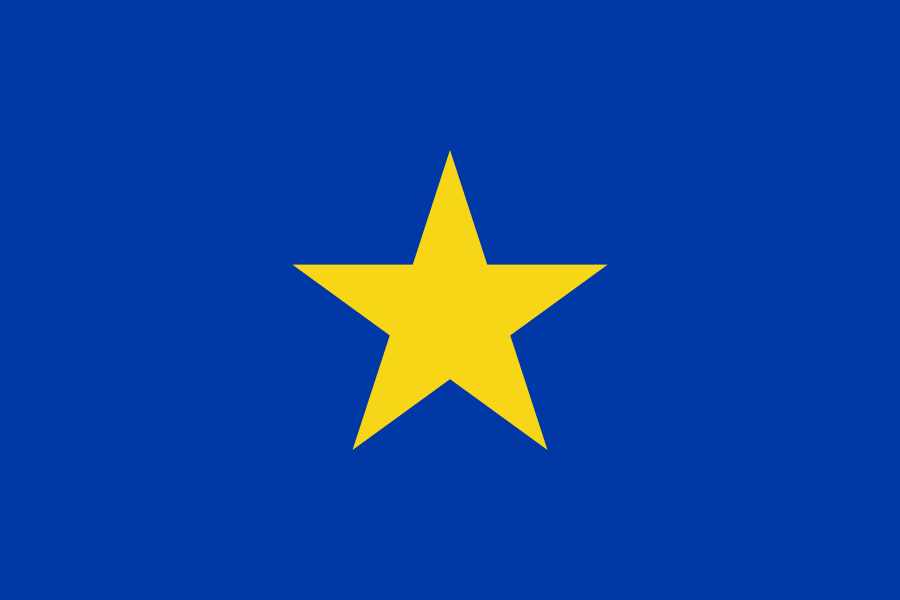
The Presidency’s historical guide dates the early blue flag with a central yellow star to 1877 and connects it with the association established under Leopold II. This was a predecessor of the independent country’s flags, not the flag of an already independent Congolese republic. Its arrangement placed the star in the center, unlike the upper-hoist star of today.
From the Congo Free State to Belgian colonial rule
The blue field and central yellow star continued under the Congo Free State, established in 1885, and remained in use after Belgium took over the territory in 1908. A change in colonial administration therefore did not necessarily bring a change in this flag. Historical captions should distinguish the Congo Free State from the later Belgian Congo.
Independence and seven stars
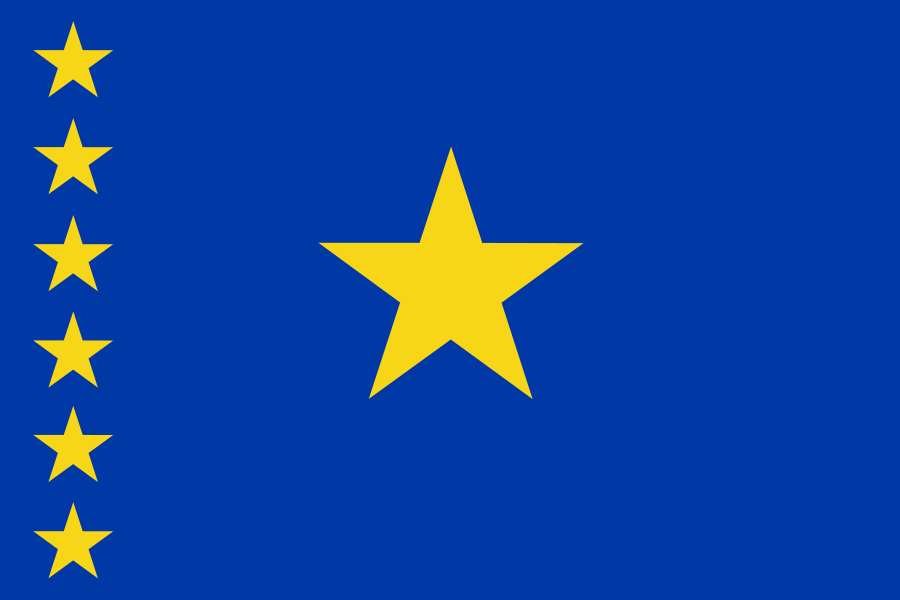
At independence on June 30, 1960, the flag added six small yellow stars in a vertical row near the hoist while retaining a larger star in the field. The smaller stars represented the six provinces of that period. There were seven stars in total: six small stars plus one large star. The design belongs to the Republic of the Congo associated with the capital Léopoldville.
The diagonal band appears
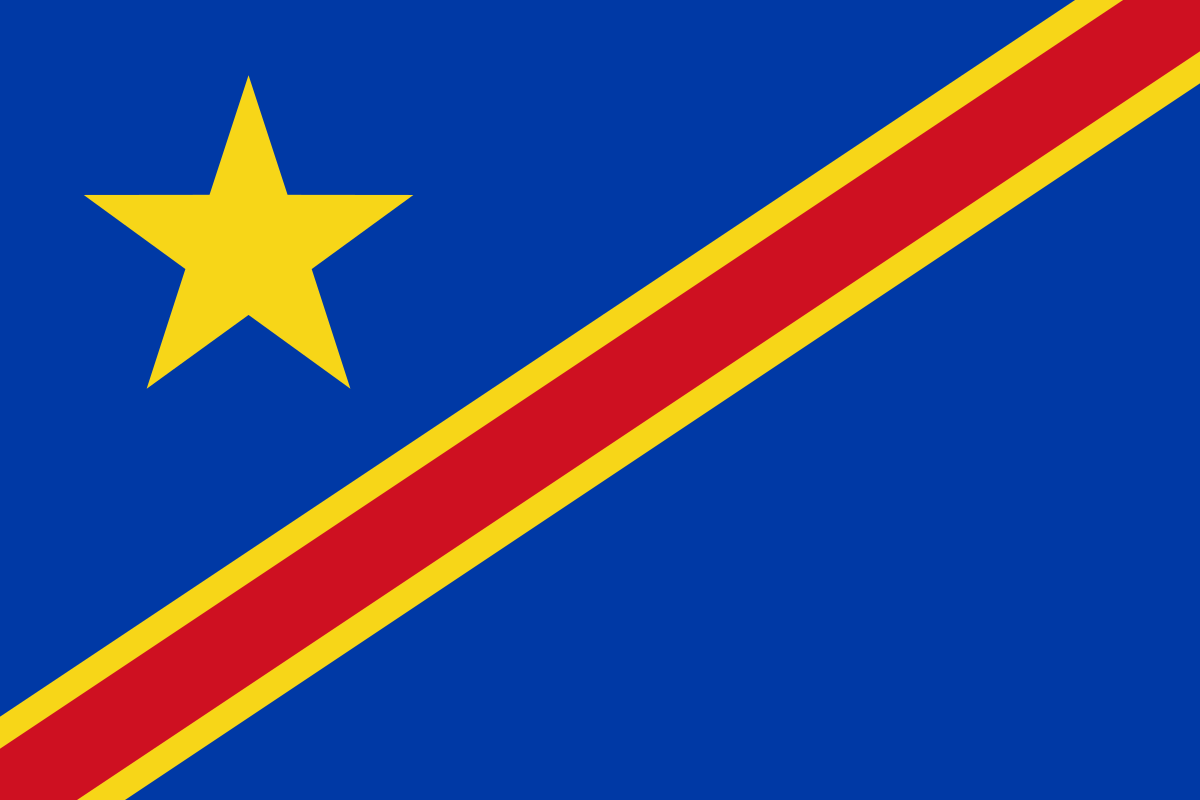
In 1963, a new arrangement replaced the row of six small stars with a single upper-hoist star and a red diagonal edged in yellow. This introduced the basic combination familiar from the present flag. Specialist references disagree about the precise day of the 1963 adoption, so the year is the sounder date to use without resolving that documentary conflict.
A revised diagonal design
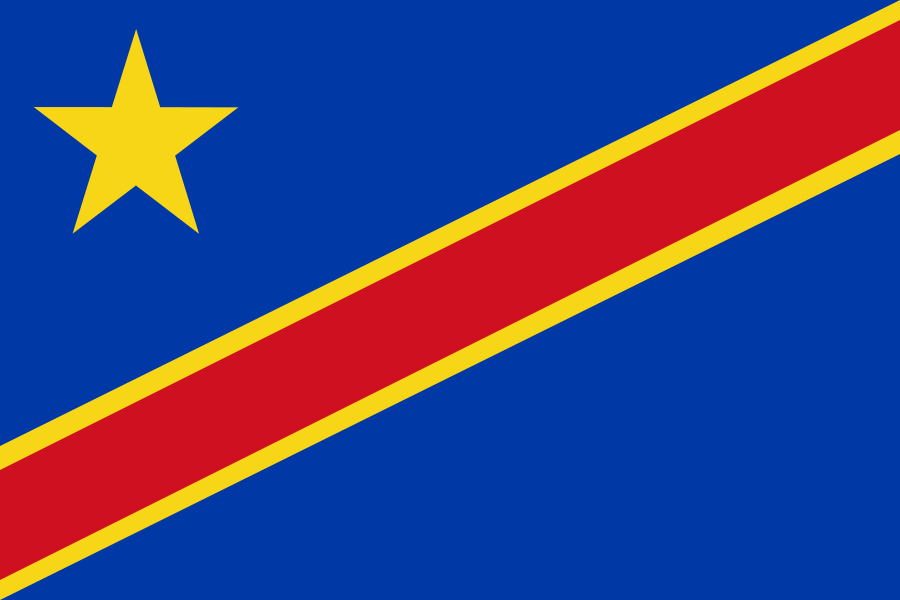
The historical series distinguishes a revised version used from 1966 to 1971, with a changed treatment of the star and diagonal. Flags of the World records a September 19, 1966 ordinance and a historical dimensional description. That account is evidence about the 1960s flag, not authority for applying the same dimensions to the 2006 flag.
Zaire and the hand holding a torch
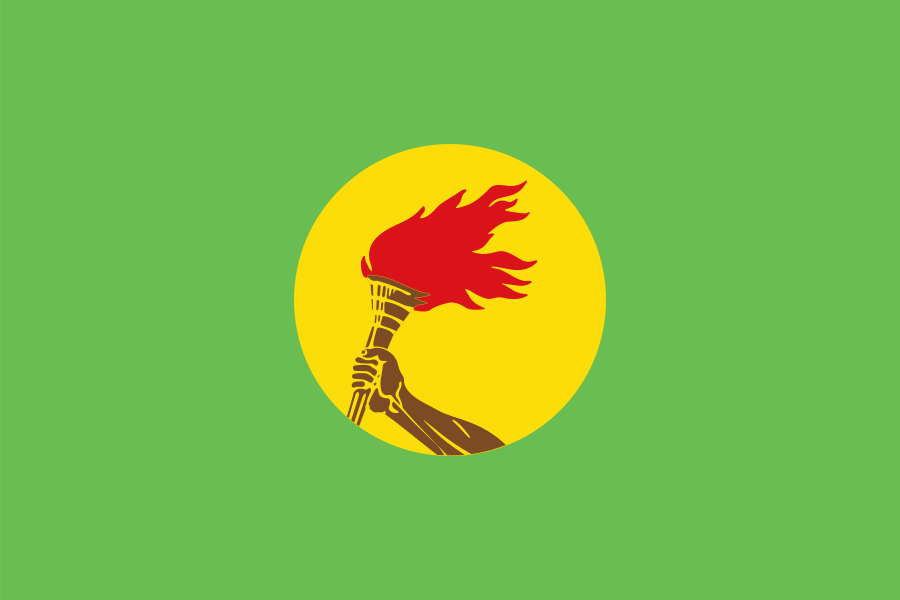
During the change to the Republic of Zaire, a new flag replaced the blue-and-star design: a green field bearing a yellow disk with a hand holding a torch and a red flame. It remained the national flag during the Zaire period, 1971–1997. The Presidency’s historical chart and specialist accounts both distinguish it clearly from the Congolese blue flags.
Return of the seven-star design
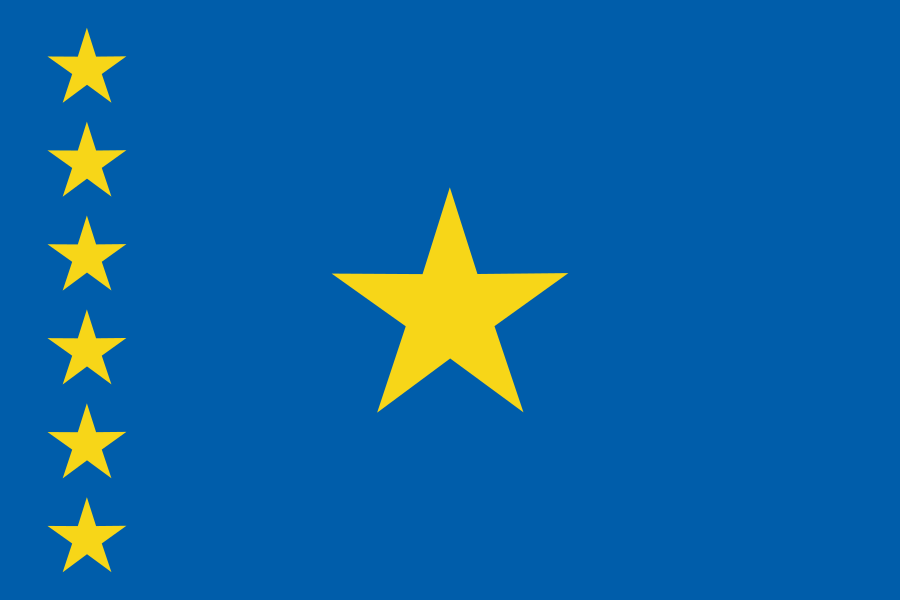
After the end of Mobutu’s rule and the restoration of the Democratic Republic of the Congo name, the national flag returned to the independence-era family of a large star and six small hoist stars. The diagonal-band design was not the adopted national flag at this stage. A restored historical arrangement need not reproduce every earlier drawing’s shade or star coordinates.
The transitional period
The Presidency’s chart separates 1997–2003 from 2003–2006, showing a lighter blue treatment for the latter period. The seven-star arrangement continued through the transition. Published images of this flag family vary in blue shade and star placement; a single undated drawing cannot reliably distinguish every physical flag made during those years.
The present national flag
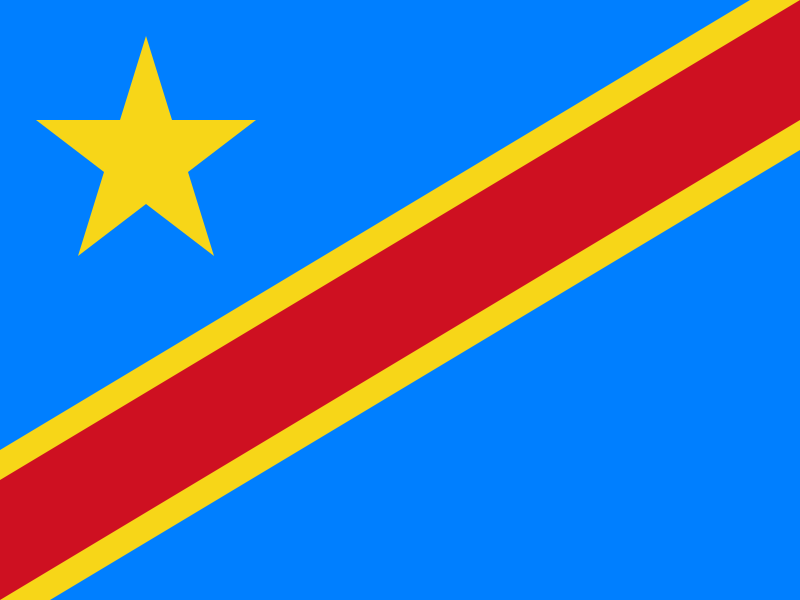
The Constitution promulgated on February 18, 2006 establishes the present sky-blue flag with an upper-left yellow star and a red diagonal narrowly bordered in yellow. The return of the diagonal is therefore a 2006 development in the current constitutional framework, even though a closely related design had existed in the 1960s.
The most useful historical distinction is the arrangement, followed by the date. A central star alone indicates the early blue-flag family; a large star with six small hoist stars indicates the independence or restored family; a hand and torch indicates Zaire. A diagonal requires more care because both the 1960s and current designs use one.
Adoption and the constitutional framework
The current flag is anchored in Article 1 of the Constitution of February 18, 2006. The text describes a sky-blue flag, a yellow star in the upper-left corner, and a red diagonal band finely bordered in yellow. The consolidated official text published in 2011 retains that description.
Three dates should be kept separate. June 30, 1960 marks independence. February 18, 2006 marks the promulgation of the Constitution establishing the current flag. 2011 identifies the amended constitutional text consulted here; its publication did not establish a different flag. A document’s later printing date is not automatically a new adoption date.
| What the constitutional description establishes | What it does not specify in Article 1 |
|---|---|
| Sky-blue field | A numerical RGB, hexadecimal, or Pantone color value |
| Yellow star at the upper left | A coordinate table or exact star diameter |
| Red diagonal narrowly bordered in yellow | A measured stripe angle or border thickness |
| The national flag as a state emblem | A complete commercial manufacturing or civilian display manual |
For an educational illustration, it is reasonable to choose a documented, recognizable vector and state its measurements. For an official production order, the relevant authority’s current approved artwork and instructions would be needed. The constitutional description and a convenient downloadable drawing serve different purposes.
Who designed the DRC flag?
No named designer of the current 2006 national flag was established by the official material reviewed here. The Presidency’s guide tentatively associates Henry Morton Stanley with the much earlier blue flag and central star. That qualified historical attribution cannot identify him as the designer of today’s diagonal-band flag.
The distinction between design authorship and legal adoption is essential. A constitution can adopt a national emblem without naming the person who drafted the artwork. Likewise, a modern illustrator may produce a faithful vector without having originated the national design. The author of a digital file is not necessarily the designer of the flag it depicts.
The current flag draws on a visual arrangement already present in the 1960s. Its 2006 constitutional adoption is verifiable even though an individual design credit is not. Leaving the current designer unidentified is more accurate than transferring a colonial attribution, a head of state’s name, or a vector artist’s name into that role.
National, ceremonial, and historical variants
The standard national flag is the plain constitutional design shown in the hero image. The historical gallery contains earlier national flags, each labeled with its period. An earlier national flag is not an interchangeable current variant simply because it represents the same territory in a museum, book, or historical discussion.
| Flag or object | Identifying feature | How to interpret it |
|---|---|---|
| Current national flag | One yellow star; red diagonal with yellow borders; sky-blue field | The ordinary national emblem described in Article 1. |
| Documented presidential ceremonial flag | A national-flag design with gold fringe and the words LE PRESIDENT | A special-use example recorded in specialist references, not additions required on ordinary flags. |
| National coat of arms | Leopard’s head with associated tusk and spear elements | A separately defined emblem; not a device on the ordinary national flag. |
| Zaire flag | Hand and torch inside a yellow disk on green | Historical national flag of the 1971–1997 period. |
| Seven-star flag | One large star plus six smaller hoist stars | Historical flag family associated with 1960–1963 and 1997–2006. |
The presidential example is described cautiously because published photographs and specialist classifications do not amount to a complete current regulation for every office, vehicle, or guard unit. Gold fringe can also be a feature of ceremonial manufacture. Neither fringe nor a nearby presidential title should be silently added to a general-purpose national-flag illustration.
How is the DRC flag different from the Republic of the Congo flag?
The Democratic Republic of the Congo flag has a sky-blue field, one yellow star, and a red diagonal edged in yellow. The Republic of the Congo flag has green and red areas separated by a yellow diagonal, with no star. Their capitals are Kinshasa and Brazzaville, respectively.
| Feature | Democratic Republic of the Congo | Republic of the Congo |
|---|---|---|
| Capital | Kinshasa | Brazzaville |
| Common distinguishing name | Congo-Kinshasa | Congo-Brazzaville |
| Field and major areas | Sky blue on both sides of the diagonal | Green toward the hoist and red toward the fly |
| Diagonal | Red, with narrow yellow borders | Yellow |
| Star | One yellow five-pointed star | None |
| Constitutional flag description | Article 1 | Article 3 |
For quick recognition, look for the yellow star on blue. The diagonals alone are a less useful clue because both flags have one rising in the familiar front view. Search results, captions, and image filenames that say only “Congo flag” should be checked against the full country name before use.
Manufacture and faithful reproduction
A well-made reproduction preserves the blue field, five-pointed yellow star, red band, and two visibly narrower yellow borders. Those are the defining components. The constitutional article does not supply a table of approved fabrics, a mandatory weaving method, or a set of standard retail sizes, so such requirements should not be borrowed from another country’s flag code.
Checks for a faithful reproduction
- Use the current single-star diagonal design when the present national flag is intended.
- Keep both yellow borders visible and narrower than the red band.
- Scale the artwork uniformly so the star is not stretched.
- Specify the finished visible dimensions separately from hems, sleeves, and attachment allowances.
Errors to avoid
- Substituting the seven-star or Zaire design for the current national flag.
- Adding the coat of arms or LE PRESIDENT to an ordinary national flag.
- Calling a chosen screen color or drawing ratio an official legal specification without its authority.
- Mistaking a production sample or supplier’s illustration for proof of adoption.
The last point has a specifically Congolese illustration. Flags of the World records that a Johannesburg manufacturer produced diagonal-band flags during the uncertain transition in 1997. The restored seven-star design was ultimately selected instead. Some of those other flags reportedly remained with the manufacturer and reached collectors. A manufactured object can therefore be real without having been an adopted national flag.
For digital work, the downloadable SVG is useful because it scales without introducing raster blur. For fabric, the finished result should be checked against the approved production artwork rather than a photograph taken in changing light. These are practical reproduction principles; they are not presented as a new Congolese textile law.
Display and respectful handling
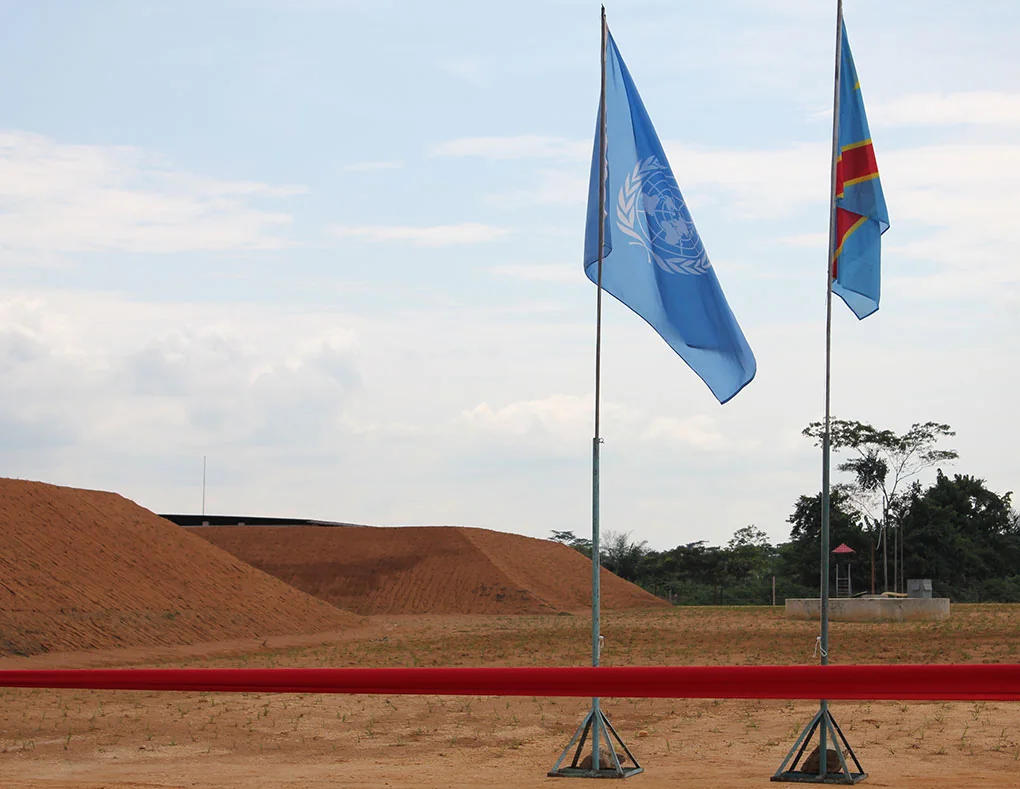
The flag serves as a visible national emblem in public ceremonies and other settings. The photograph of the DRC and UN flags in Kisangani provides a documented example of joint display. It records a particular ceremony; it does not establish a universal rule about precedence, pole height, or positioning at every future event.
General good practice
- Use a clean, recognizable flag in sound condition.
- Secure the hoist so the flag can move without tangling or dragging.
- Check the country identity and current design before a formal event.
- Follow the organizer’s or competent authority’s instructions for official ceremonies.
Do not infer a national rule
- A photograph alone does not set a required order among several flags.
- A flag flown at night does not by itself prove a national lighting requirement.
- Foreign flag codes do not establish Congolese funeral entitlements or ceremonial restrictions.
- Article 1 should not be cited as though it contains a complete schedule of display times.
These handling suggestions are identified as general good practice. The documented Congolese legal description establishes the emblem; it is not a comprehensive civilian flag code. Specific government, military, diplomatic, or event instructions may address circumstances beyond that description. The applicable instruction should be consulted for a formal ceremony rather than extrapolated from an unrelated example.
Front, reverse, and orientation
In the usual front view, the star is near the upper-left corner and the band rises toward the upper-right corner. The pole side determines the hoist. Looking at the opposite side of the same flag reverses the left-right appearance, so the star can appear at the upper right without identifying a different design.
A two-sided fabric object and a one-sided page illustration must therefore be read differently. To judge a photograph, locate the pole or attachment edge first. A reversed photograph can also mirror a design, which is another reason not to diagnose an incorrect flag solely from the apparent direction of the diagonal.
Vertical hanging is a separate display question. Rotating a digital picture demonstrates geometry, but it does not establish a national ceremonial instruction. This article does not turn an Olympic organizer’s vertical-display convention into a binding rule for Congolese buildings, schools, or private homes.
National Day: June 30
June 30 is Independence Day in the Democratic Republic of the Congo, commemorating independence on June 30, 1960. The legal holiday list in Ordinance No. 23-042 of March 30, 2023 includes June 30 as Independence Day. It provides a verified national observance to associate with the flag.
Independence Day is not the adoption anniversary of the current design. The flag used at independence had one large star and six smaller stars; the present single-star diagonal design was established in 2006. A modern Independence Day celebration can therefore fly a national flag adopted decades after the event being commemorated.
February 18 is relevant to the Constitution and the current flag’s adoption. It should not automatically be labeled a separate statutory “Flag Day.” The 2023 holiday list reviewed here does not designate it that way. The history timeline keeps the adoption event and the national independence observance distinct.
Half-mast and national mourning
Half-masting is documented in Congolese national mourning announcements. For example, the Ministry of Communication and Media reported nationwide mourning with flags at half-mast on May 8, 2023, after the deadly floods in Kalehe, South Kivu. This is a verified dated instruction, not a permanent schedule for all deaths or disasters.
| Context | Verified information | Limit of the example |
|---|---|---|
| Kalehe flood mourning | May 8, 2023: nationwide mourning and flags at half-mast, as reported by the government ministry | The date and scope belong to that particular announcement. |
| A later mourning period | Its own official announcement determines the applicable dates and scope | Do not reuse the length of an earlier mourning period automatically. |
| Routine flag description | Article 1 defines the national emblem | It does not enumerate funeral entitlements or all half-mast occasions. |
For an official occasion, the useful questions are who issued the instruction, which institutions or territory it covers, and when it begins and ends. A school, embassy, or public office should follow the instruction that applies to it. The May 2023 example confirms the practice without inventing a fixed number of mourning days or a list of eligible officeholders.
Common misconceptions and identification checks
| Claim or confusion | More accurate explanation |
|---|---|
| “The DRC and Congo-Brazzaville share one flag.” | They are different countries with different national flags. Look for the DRC’s star and blue field. |
| “The current DRC flag has six or seven stars.” | It has one star. The older independence and restored designs have six small stars plus a large star. |
| “The torch is part of the present flag.” | The torch belongs to the historical Zaire flag, used during 1971–1997. |
| “The five points legally represent five provinces.” | Official explanations associate the star with unity and a bright future; no five-province meaning is established here. |
| “The current flag was adopted at independence.” | Independence occurred in 1960; the current constitutional flag dates from February 18, 2006. |
| “Any precise color code is an official national code.” | A digital drawing or event manual can specify colors without creating national law. |
| “The flag and coat of arms are the same emblem.” | The Constitution describes them separately; the ordinary flag does not display the leopard’s head. |
| “A 1960s diagonal flag is necessarily today’s flag.” | The overall arrangement is related, but the historical date, color treatment, and drawing details need checking. |
A reliable identification sequence is simple: establish the country, count the stars, inspect the major colors, and check the date or context. Only then compare fine drawing details. This sequence is more useful for learning and image verification than memorizing an unlabeled ratio or treating every shade difference as a new national flag.
The flag in a documented public setting
The national flag is also used beyond constitutional illustrations and official ceremonies. In the photograph below, members of the DRC national soccer team pose with it. The file record dates the image to July 19, 2013. The flag’s broad blue field, yellow star, and diagonal make it recognizable even when the fabric is held rather than flown.
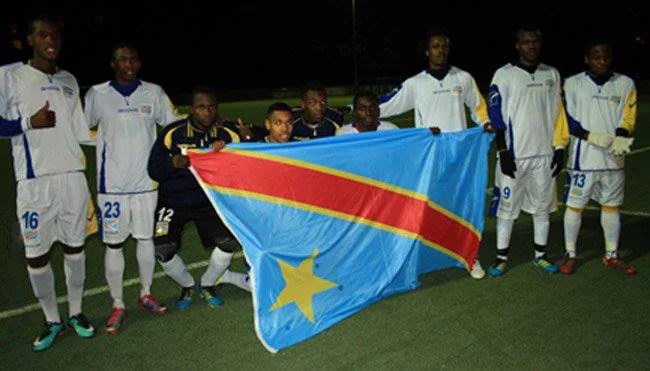
In this photograph, the star appears near the bottom of the held cloth. The image is reproduced in its source orientation. Compare it with the flat flag drawing to distinguish the national design from the way a particular fabric flag is being held.
The ceremony photograph in the opening media card shows a different use: the DRC flag displayed alongside the United Nations flag in Kisangani. Its source describes an ammunition-depot handover in October 2013, while the photograph was published as MONUSCO’s image of the day on November 15. Separating those dates avoids turning the publication date into the event date.
Photographs and diagrams answer different questions. Photographs document particular objects and settings. The construction drawings show the flat design and its chosen coordinates clearly. Neither kind of image should be mistaken for a complete national manufacturing or display regulation.
DR Congo flag pictures
Current flag in a common 4:3 width:height rendering: sky blue, a yellow star, and a red diagonal band edged in yellow.
GKBook redraw of public-domain geometry; digital reference by Nightstallion and Commons contributors.Download image
The upper-hoist star enlarged from the current reference drawing. Its five points do not represent five provinces.
GKBook drawing; geometry documented in the editorial record.Download image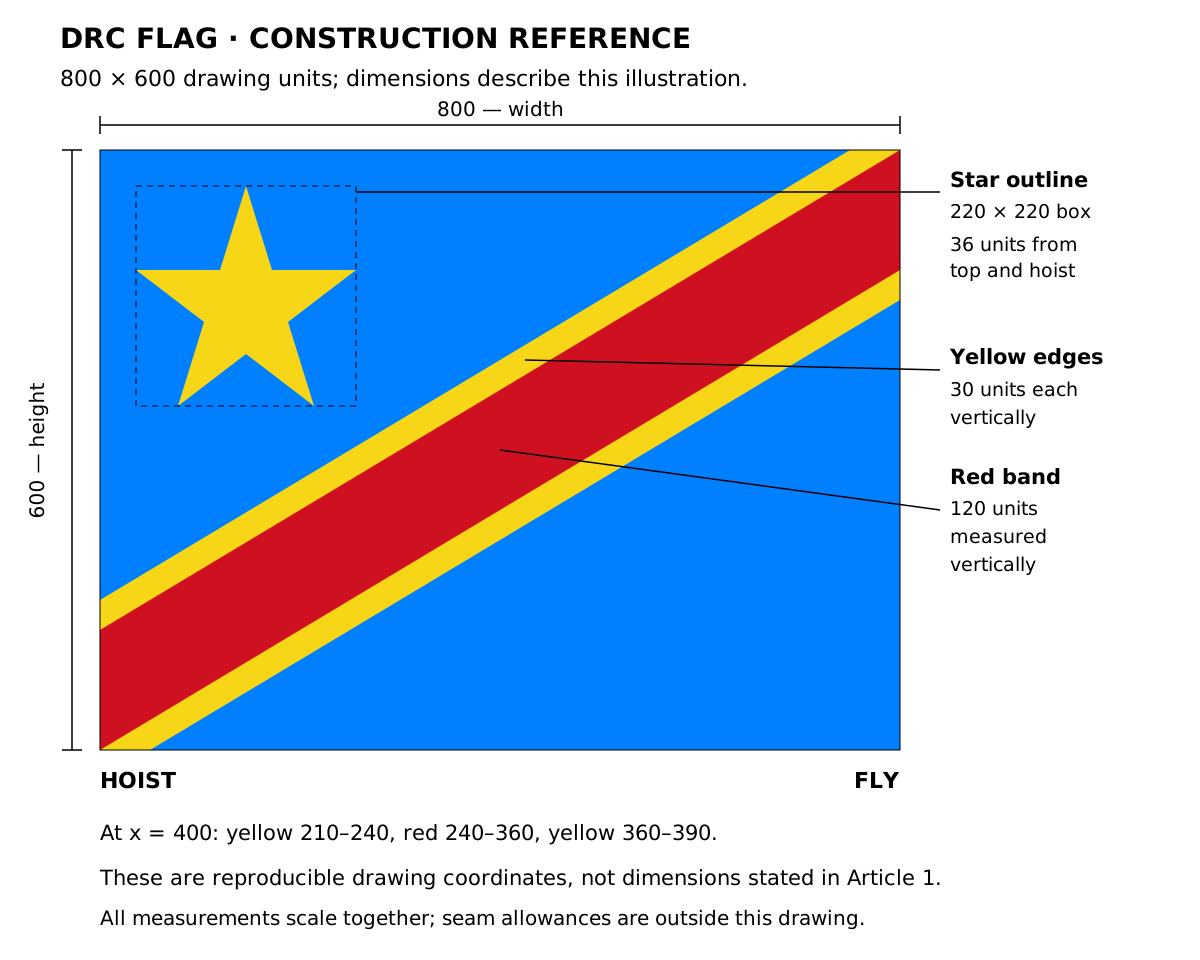
An 800 × 600 reference construction with labeled hoist, fly, star bounds, and diagonal-band measurements. Article 1 does not prescribe these coordinates.
GKBook drawing; geometry documented in the editorial record.Download image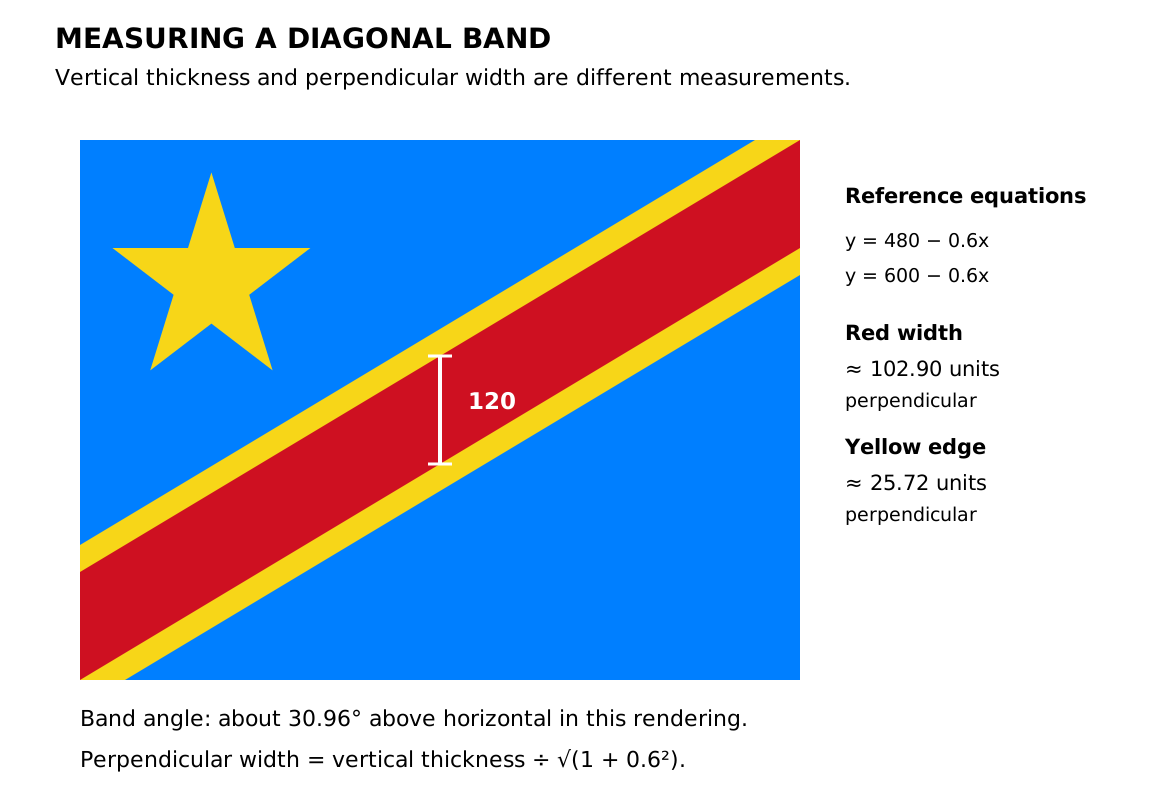
Calculated geometry of the illustrated band: a vertical red thickness of 120 units equals about 102.90 units measured perpendicular to its edges.
GKBook drawing; geometry documented in the editorial record.Download image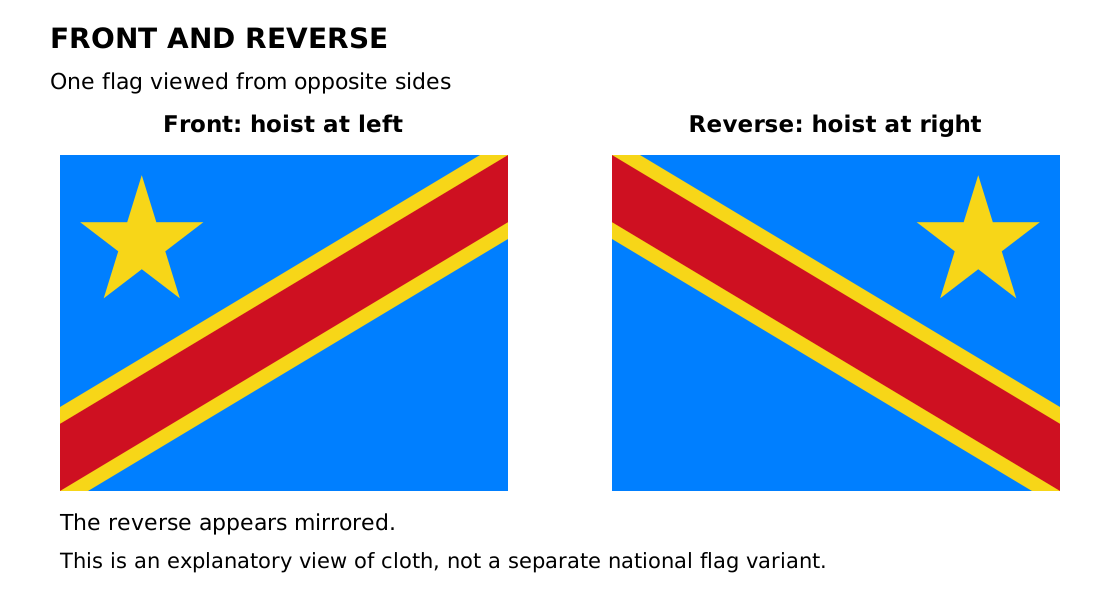
The familiar front view has the star at upper left. Looking at the other side of the same flag mirrors the layout, placing the hoist and star on the right.
GKBook drawing; geometry documented in the editorial record.Download image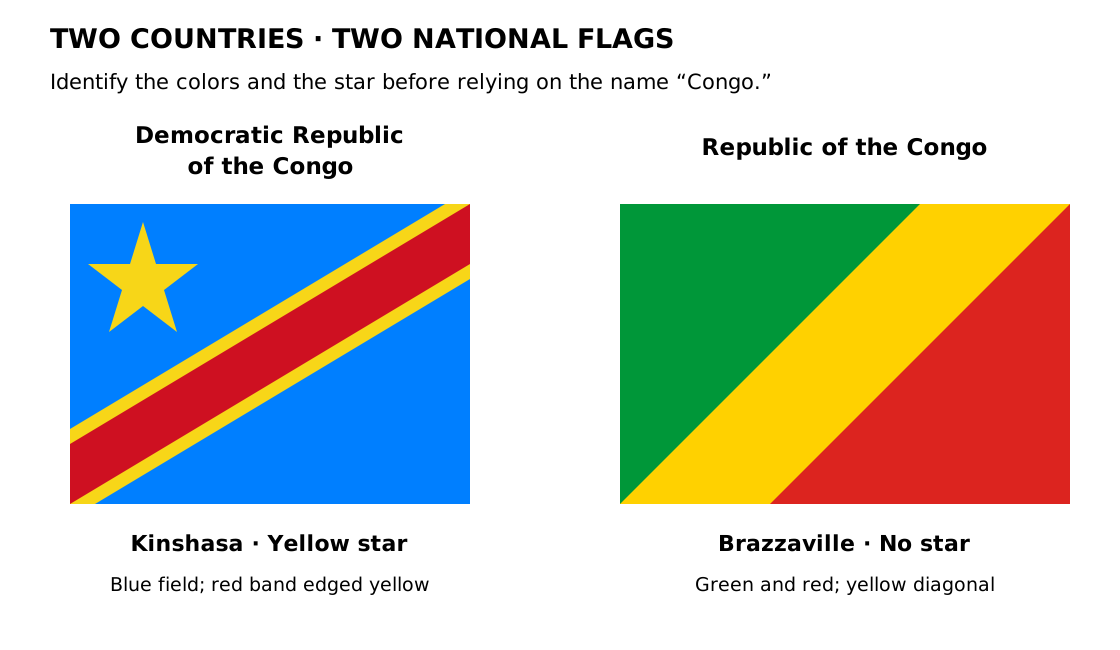
The DRC flag has a blue field, yellow star, and red band with yellow edges. The Republic of the Congo has green and red areas separated by a yellow diagonal.
GKBook drawing; geometry documented in the editorial record.Download image
Historical reference drawing of the blue flag with a central yellow star, used before independence under successive colonial arrangements.
Public-domain flag artwork from Wikimedia Commons; Commons contributors; normalized and labeled by GKBook.Download image
Historical reference drawing: one large yellow star and six small hoist stars on a blue field; seven stars in total.
Public-domain flag artwork from Wikimedia Commons; Commons contributors; normalized and labeled by GKBook.Download image
Historical reference drawing of the 1963–1966 flag with a yellow upper-hoist star and a comparatively narrow red diagonal edged in yellow.
Public-domain flag artwork from Wikimedia Commons; Commons contributors; normalized and labeled by GKBook.Download image
Historical reference drawing of the revised diagonal design used from 1966 to 1971. Its proportions and shades must not be treated as current specifications.
Public-domain flag artwork from Wikimedia Commons; Commons contributors; normalized and labeled by GKBook.Download image
Historical reference drawing: a green field with a yellow disk, a hand holding a torch, and a red flame. This is not the current DRC flag.
Public-domain flag artwork from Wikimedia Commons; Moyogo and later contributors; normalized and labeled by GKBook.Download image
Representative drawing of the restored seven-star flag family used from 1997 to 2006. Published historical drawings differ in blue shade and star placement.
Public-domain flag artwork from Wikimedia Commons; Commons contributors; normalized and labeled by GKBook.Download image
The DRC flag (right) beside the UN flag at an ammunition-depot ceremony in Kisangani, October 2013. MONUSCO published the photograph on November 15, 2013.
MONUSCO / Michelle Healy. CC BY-SA 2.0. Converted to WebP; no crop. Image credit and license.Download image
The DRC national soccer team holding the national flag in a photograph dated July 19, 2013.
Lansky nzamokili; Commons version edited by Beao. CC BY-SA 3.0. Converted to WebP; no additional crop. Image credit and license.Download imageFrequently asked questions
What does the flag of the Democratic Republic of the Congo look like?
It has a sky-blue field, a yellow five-pointed star near the upper hoist, and a red diagonal band with narrow yellow borders. In the familiar front view, the band rises from the lower left toward the upper right. The current design dates from 2006.
When was the current DRC flag adopted?
The current design was established by the Constitution promulgated on February 18, 2006. Article 1 describes its sky-blue field, yellow upper-left star, and red diagonal bordered in yellow. This date is separate from independence on June 30, 1960, when a different flag was used.
What does the blue color mean?
The Presidency’s national-symbols guide and the DRC Embassy explain sky blue as a symbol of peace. This is an official explanatory meaning associated with the flag. The constitutional article itself describes the design and colors rather than setting out a complete color-by-color interpretation.
What does the red diagonal mean?
Official explanatory material associates the red band with the blood of the country’s martyrs. The band is bordered narrowly in yellow and crosses the blue field diagonally. Its meaning should be distinguished from the measured stripe width chosen for a particular drawing or manufactured specimen.
What does yellow represent?
Yellow is associated with the country’s wealth in the official explanation. It appears both in the star and along the edges of the red diagonal. The star also carries a specific meaning of national unity and a bright future, beyond the color’s general association with wealth.
What does the yellow star symbolize?
The yellow star is explained as representing a united country and the hope of a radiant future. It has five points in the familiar national design. Those points should not be assigned a five-province meaning, which is not established by the official explanations used here.
How many stars are on the current flag?
The current national flag has one yellow five-pointed star near the upper hoist. Earlier flags used one large star with six smaller stars along the hoist, making seven in total. Those older arrangements should not be used to count the stars on today’s flag.
What is the DRC flag’s ratio?
A common current rendering uses 4:3 width:height, equivalent to 3:4 height:width. That is the format used in this article’s current-flag drawings. Article 1 does not state a numerical ratio, and other published references use different proportions, so the convention should not be mislabeled as constitutional law.
Are the hexadecimal color codes official?
The codes #007FFF, #CE1021, and #F7D618 identify the blue, red, and yellow used in this article’s reference drawings. Article 1 names the colors without providing those codes. A digital palette or an event manual is not, by itself, evidence of a national statutory color standard.
Which way does the diagonal run?
In the familiar front view, with the hoist on the left, the red diagonal rises from the lower-left region toward the upper right. The star sits in the blue area above it near the hoist. Viewing the reverse of the same cloth mirrors this arrangement.
Does the reverse have a different design?
The reverse of the same piece of cloth appears mirrored, with the hoist and star on the viewer’s right. This is a change in viewpoint, not a separate national flag. To interpret a photograph, identify the pole or attachment edge before judging the star’s apparent position.
Does the national flag include a leopard?
The ordinary national flag does not include a leopard. The leopard’s head belongs to the separately defined national coat of arms, which can appear beside a flag in official settings. Article 1 describes the flag and the coat of arms as distinct national symbols.
Who designed the current DRC flag?
No individual designer of the current flag was verified in the official material reviewed. Henry Morton Stanley is tentatively associated with the much earlier central-star flag in historical accounts. That qualified attribution does not identify him as the designer of the national flag adopted in 2006.
What was the independence flag in 1960?
The independence flag had a blue field, a large yellow star, and six smaller yellow stars arranged near the hoist. The six small stars represented the provinces of that period. It therefore had seven stars altogether and did not have the current red diagonal band.
Why did the older flag have six small stars?
The six small stars on the independence-era flag represented the six provinces of that time. A larger star also appeared in the field, bringing the total to seven. That historical provincial association should not be transferred to the single star or five points of today’s flag.
What did the flag of Zaire look like?
The Zaire flag had a green field with a yellow disk containing a hand holding a torch with a red flame. It belonged to the 1971–1997 period. Although part of the same country’s flag history, it is not an alternative current national flag of the DRC.
Which flag was restored in 1997?
The restored flag returned to the family of the 1960 independence design: a blue field with one large star and six small hoist stars. It was not the present diagonal-band flag. That seven-star family continued through the transitional period until the constitutional change in 2006.
Was there a flag change in 2003?
The Presidency’s historical chart distinguishes the 1997–2003 and 2003–2006 periods and depicts a lighter blue treatment for the latter. The seven-star arrangement continued. Published drawings and actual specimens vary, so their shades and coordinates should not be treated as a single, fully verified technical standard.
How do the two Congo flags differ?
The DRC flag has a blue field, yellow star, and red diagonal with yellow edges. The Republic of the Congo flag has green and red areas separated by a yellow diagonal and no star. Kinshasa is the DRC capital; Brazzaville is the other country’s capital.
When is the DRC’s National Day?
Independence Day is June 30, commemorating independence on June 30, 1960. It appears in the legal holiday list established by the March 30, 2023 ordinance. The present flag was adopted much later, in 2006, so Independence Day and the flag’s adoption anniversary are different dates.
Is February 18 an official Flag Day?
February 18 is the date of the 2006 Constitution and the current flag’s adoption. The 2023 statutory holiday list reviewed for this article does not designate it as a separate Flag Day. June 30 is the verified Independence Day observance included in the article’s navigation.
When is the DRC flag flown at half-mast?
Half-masting can be directed in an official national mourning announcement. The government documented nationwide flags at half-mast on May 8, 2023 after the Kalehe floods. That dated example does not establish a permanent timetable: a later mourning period must be read according to its own applicable announcement.
Can the construction diagram be used as a legal manufacturing standard?
The diagram provides exact coordinates for the illustrated flag, making that rendering reproducible. It does not claim that the Constitution prescribes those measurements. An official manufacturing order would require the relevant authority’s approved artwork and instructions, including any production requirements beyond the constitutional description of the design.
Can I download the flag images?
The gallery provides downloads of the actual SVG drawings and WebP photographs delivered with this article. Historical drawings are labeled by period, and photographs carry their credits. The two documentary photographs have Creative Commons licenses, whose attribution and reuse terms are supplied through the internal image-credit file.

We Value Your Opinion Comments