
Chile flag picture
Explore the construction sheet for exact proportions, or compare Chile and Texas to see why the blue corner matters.
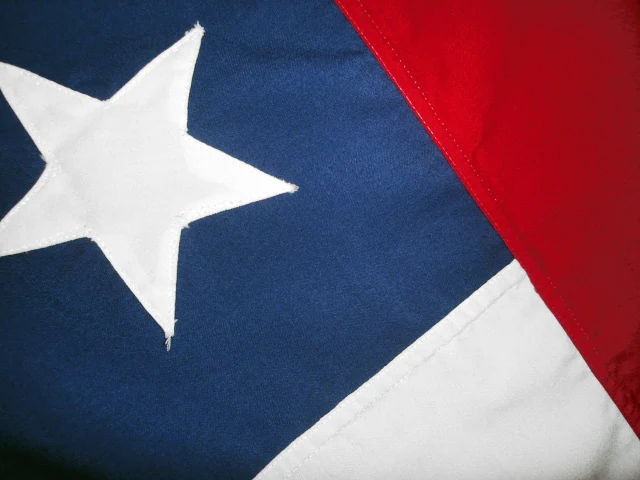
| Name | La Estrella SolitariaThe Lone Star |
|---|---|
| Adopted | October 18, 1817Later construction rules: 1912; general regulation: 1967 |
| Proportions | 2:3 · height:widthBlue canton is a square |
| Colors | Blue, white, and redOne white five-pointed star |
| Star size | Half the canton’s sideDiameter of the star’s outer circle |
| Authorship | Antonio Arcos, probablyZenteno led adoption; alternative attribution is discussed below |
| Flag Day | July 9Commemorates La Concepción, 1882 |
Chile’s flag pairs a white upper field with a red lower half. A square blue canton at the hoist holds one white star. Its geometric simplicity makes the Lone Star recognizable at every scale, from a small drawing to a ceremonial flag.
What does the flag of Chile look like?
Chile’s flag has two equal horizontal halves: white above red. A blue square occupies the upper corner beside the pole and contains one centered white five-pointed star. The flag is twice as high as the blue square and three times as wide, giving a height-to-width ratio of 2:3.
Known as La Estrella Solitaria, the Lone Star, this design dates to October 18, 1817. It belongs to Chile’s independence era, but its familiar geometry also reflects later standardization. Distinguish the original adoption from the 1912 law and the comprehensive regulations issued in 1967; these are different milestones in the same flag’s history.
The quickest identification cue is the small blue canton—the upper corner at the hoist. It stops halfway down the flag. The red lower half continues all the way to the pole. Those two details separate Chile’s national flag from the otherwise similar flag of Texas.
The Lone Star: shape, position, and historical detail
The star has five points, with one pointing upward in the standard horizontal drawing. It sits at the center of the blue square. Law No. 2597 defines its diameter as half the square’s side; in a construction drawing, that measurement is the diameter of the circle surrounding the star’s outer points.
Its placement is easy to misjudge. Center the star within the canton, rather than within the white upper area or within the complete flag. The emblem does not touch the surrounding edges, and it carries no border, lettering, or coat of arms in the current national design.
The modern five-pointed form should not be confused with details of the surviving independence-oath flag. Conservators documented a small eight-pointed motif inside that historic object’s decorated star. That feature belongs to the museum artifact and its interpretation; it is not an instruction to add an eight-pointed figure to today’s flag.
Colors and specifications
The legal color description uses azul turquí, white, and red. The statutes cited here do not assign hexadecimal, RGB, CMYK, or Pantone values. A legal color name, a textile specification, and a screen color are different kinds of information; a digital illustration cannot settle an exact fabric shade.
| Color | Digital value used here | RGB | Position |
|---|---|---|---|
| Blue | #0039A6 | 0, 57, 166 | Upper hoist square |
| White | #FFFFFF | 255, 255, 255 | Upper fly rectangle and star |
| Red | #D52B1E | 213, 43, 30 | Entire lower half |
For matching the drawings on this page, reuse the listed values consistently. For a physical commission, specify the intended material and obtain a color sample from the supplier. An automatic RGB-to-CMYK conversion is only a starting point: the printable result also depends on the printing process and substrate.
Photographs answer a different question: how a real flag looks in a particular setting. Sunlight through cloth can brighten red; folds can make blue appear nearly black. The documented photograph in the picture gallery is useful evidence of a physical flag, but it is not a color calibration chart.
Symbolism and meaning
Chilean heritage institutions commonly connect blue with the sky, white with Andean snow, and red with the blood shed for independence. Some official accounts also associate blue with the Pacific. These are cultural explanations of the colors, rather than additional geometric requirements in the flag law.
The star has attracted more than one explanation. Unity, the guidance of the state, and associations with Indigenous star imagery appear in institutional accounts. The Chilean Army’s account also mentions the Guñelve and interpretations involving the branches of government. Presenting one of these as the sole legally prescribed meaning would overstate the evidence.
A useful distinction is between symbolic interpretation and documented design. One star is visible and measurable; the ideas attached to it depend on the source and historical setting. Neither its five points nor the single star should be converted into an invented count of Chile’s present-day administrative regions.
Construction and proportions
Chile’s statutory ratio is 2:3, height to width. Let one unit, u, equal the side of the blue square. The overall rectangle is 3u wide and 2u high. Each horizontal half is u high, and the upper white rectangle is 2u wide. This produces a square canton without any extra adjustment.
| Part | Calculated rule | Example: 60 × 90 cm flag |
|---|---|---|
| Whole flag | Height 2u; width 3u | 60 cm high × 90 cm wide |
| Blue canton | u × u | 30 × 30 cm |
| Upper white rectangle | u high × 2u wide | 30 × 60 cm |
| Red lower half | u high × 3u wide | 30 × 90 cm |
| Star center | u/2 from the canton’s left and top | 15 cm from each of those edges |
| Star outer circle | Diameter u/2; radius u/4 | 15 cm diameter; 7.5 cm radius |
An equivalent drawing grid is six modules wide and four modules high. The canton then measures two modules on each side, and the star’s outer circle is one module across. This version is convenient for graph paper: every large rectangle falls on whole grid lines.
Resize the whole design by the same scale factor in both directions. A 100-centimeter-high flag becomes 150 centimeters wide; stretching it to a square would distort the canton and the star. The downloadable SVG keeps these relationships intact at any display resolution.
History of Chile’s flag
Three easily confused dates answer different questions: 1817 identifies adoption, 1818 connects the flag to the independence ceremonies, and 1912 supplies a major statutory construction standard. The earlier horizontal tricolors show the development of the design, while the timeline’s later entries describe regulation rather than repeated replacement of the national flag.
1812–1814
Patria Vieja: blue, white, and yellow
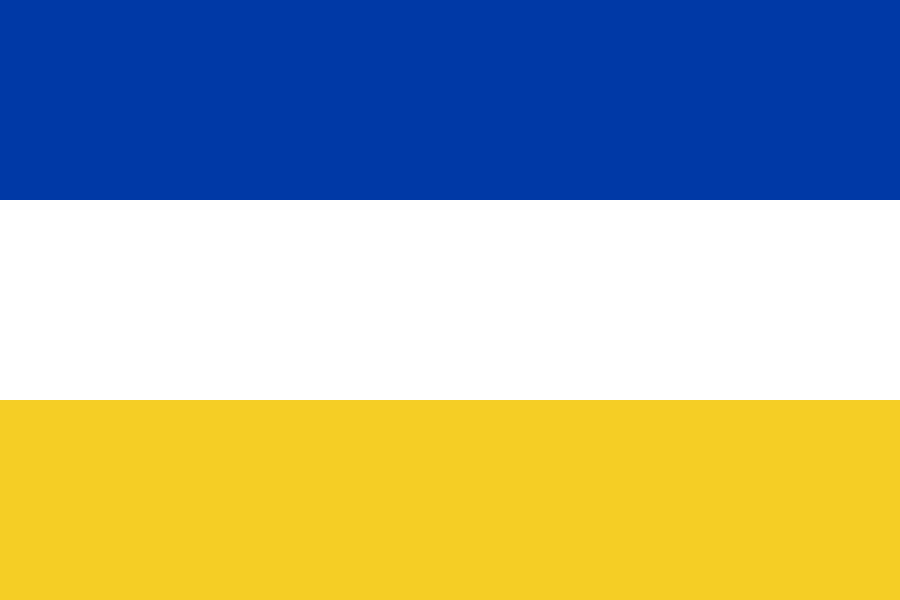
José Miguel Carrera’s government introduced the first national tricolor during the Patria Vieja period. Its horizontal blue, white, and yellow bands belong to the early autonomy movement. The national library places the flag’s introduction in 1812, alongside the period’s provisional constitutional experiment. The simple drawing here is an illustrative reconstruction, not a surviving textile.
1817
The transition tricolor
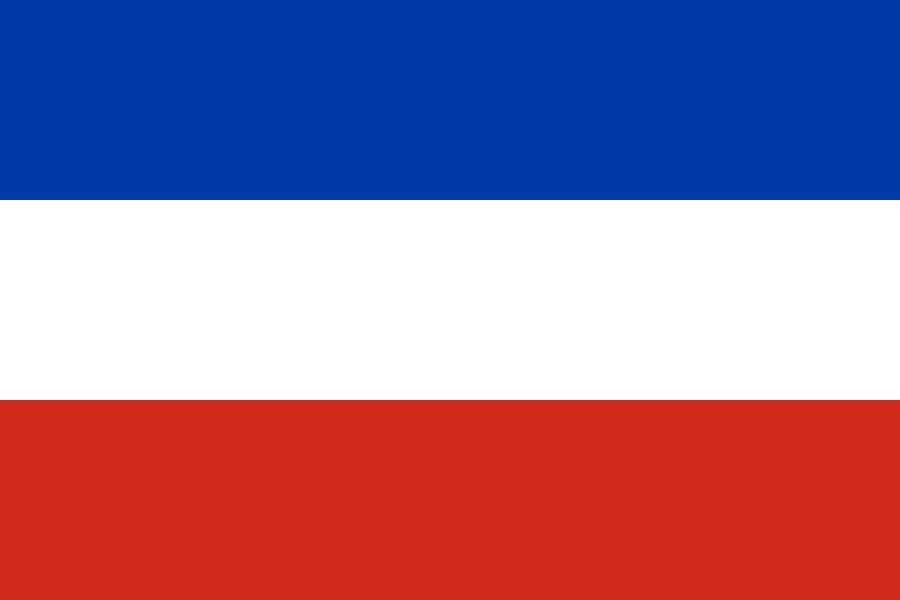
After the patriot victory at Chacabuco, the transition design used horizontal blue, white, and red bands. Red replaced the earlier yellow. This short-lived tricolor is part of the flag’s development during 1817; it is not the modern design, because it has neither the blue canton nor the white star.
October 18, 1817
The Lone Star is adopted
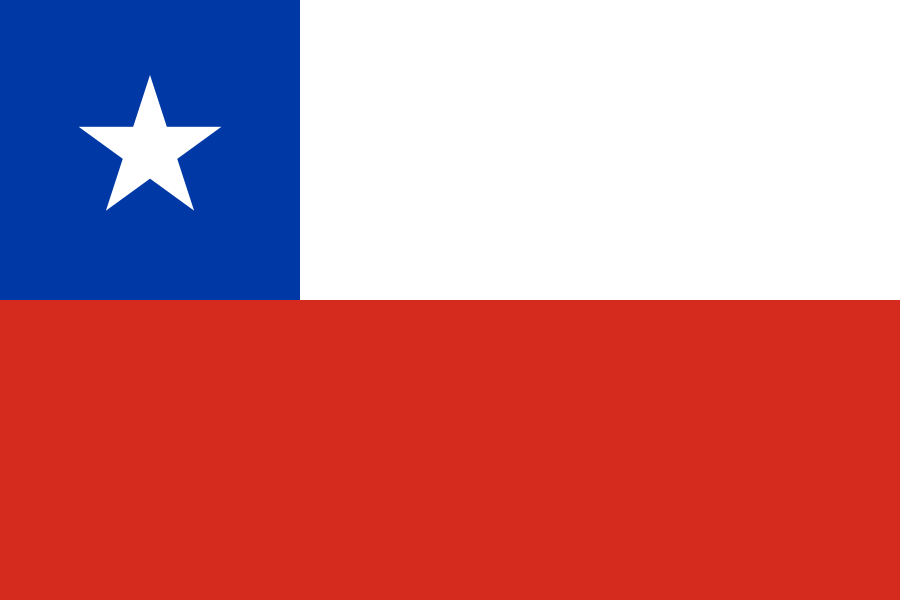
The present flag’s adoption is associated with Bernardo O’Higgins’s government and War Minister José Ignacio Zenteno. Chile’s Navy records October 18 as the approval date. A modern standardized drawing is used here to identify the design family; it should not be mistaken for a facsimile of the earliest ceremonial flag.
February 12, 1818
The flag and the independence ceremonies
The flag became part of the public affirmation of Chilean independence. The surviving oath flag associated with the Santiago ceremony is a decorated, double-faced textile. Its central oval emblems and embellished star make it a historically specific object, rather than a plain modern flag with unusually worn colors.
1854
Proportions receive later definition
The Foreign Ministry’s historical account identifies 1854 as a milestone in setting the flag’s proportions. This belongs to the standardization story. It does not change the original adoption year to 1854, nor does it justify treating every early flag illustration as if it followed the later construction exactly.
January 11, 1912
Law No. 2597 defines the geometry
The law specifies the relationship between hoist and fly, the upper and lower divisions, and the star’s diameter. It is the key statutory reference for constructing the familiar flag. Its precise measurements are more useful for a drawing than copying the outline of a billowing flag from a photograph.
1967
The flag regulations are consolidated
Decree No. 1534 was issued on October 18 and published on December 12, 1967. It assembled rules covering national emblems, dimensions, display, and ceremonial use. The decree’s historical framing marks the 150th anniversary of the 1817 design; 1967 is therefore a regulatory milestone, not the flag’s first adoption.
Who designed Chile’s flag?
The flag is associated with War Minister José Ignacio Zenteno under Bernardo O’Higgins. Chile’s Foreign Ministry considers Antonio Arcos the probable designer, while noting that some historians name Gregorio de Andía y Varela. The careful answer distinguishes the government’s adoption of the emblem from the less certain attribution of its drawing.
Chile’s Navy gives the design to the Spanish engineer Antonio Arcos. The Foreign Ministry preserves the alternative attribution, so the two institutional accounts should be read together. A confident, unqualified single-name credit would conceal that difference; the infobox therefore separates adoption responsibility from proposed artistic authorship.
The making of a particular flag is another question. The heritage service attributes the surviving independence-oath textile to Dolores Prats de Huici. That is a statement about the manufacture of an important object, not proof that its maker devised the national flag’s whole design. Keep designer, approving official, and textile maker separate.
The surviving independence-oath flag
The National Historical Museum’s oath flag preserves a more elaborate version of the early emblem. The conservation study by Catalina Rivera Sánchez and Francisca Campos Álvarez describes a double-faced silk-satin textile, approximately 240 centimeters long and 143 centimeters high. Each face carries a different painted oval shield.
One shield combines a column, globe, star, and crossed flags; the other includes a volcano and the words Chile Independiente. The star has metallic embellishment and an internal eight-pointed motif. These details explain why a photograph of the artifact may look unfamiliar to someone expecting only the plain modern canton and star.
The flag was taken by the MIR in 1980 and returned in 2003. A later conservation project addressed the condition of its fragile silk, damaged areas, and earlier interventions. The museum object’s story concerns custody, evidence, and preservation as well as patriotic symbolism.
A modern reconstruction can show a documented arrangement, but it cannot replace the textile as evidence. Nor should an illustrator silently “correct” the surviving object to modern proportions. Historical objects and present-day construction diagrams serve different purposes, and both need labels that make that distinction clear.
Manufacture, materials, and practical quality
The surviving ceremonial silk flag does not establish silk as the required material for every current flag. The general emblem regulations reviewed for this article specify appearance and display, without prescribing a universal fabric weight or a single manufacturing process for all civilian flags. Institutional or procurement requirements may be more specific.
For a practical order, confirm the finished—not merely the unsewn—dimensions. Hems, sleeves, and attachments must be planned without changing the visible canton or squeezing the upper white rectangle. Ask for a sample showing the complete star and verify that its proportions match the finished field.
The following are ordinary quality checks, not additional Chilean legal restrictions: inspect seams, look for uneven stripe boundaries, check that the star is not stretched, and confirm the intended appearance from both sides. A printed flag and a sewn flag can reproduce the same geometry through different production methods.
For classroom work, paper and digital drawings avoid many textile problems. Start with the dimensioned sheet, then remove guide lines from the final flag. Keep the explanatory drawing separately so readers can tell which marks belong to the flag and which were added to teach its construction.
Display and flag protocol
Decree No. 1534 allows use or hoisting on ordinary days without prior authorization, subject to the emblem rules. It also identifies May 21 and September 18–19 as mandatory full-staff display dates. These standing provisions should be distinguished from a special mourning declaration or instructions for a particular ceremony.
For a clear, correct display
- Keep the flag clean and in good condition.
- Use a white pole for the regulated exterior display.
- For a flat horizontal or vertical display, place blue at the viewer’s upper left.
- Use the correct proportions and show the whole emblem.
Common mistakes to avoid
- Do not extend the blue canton to the bottom edge.
- Do not center the star in the entire upper half.
- Do not stretch the flag or replace its single star with another badge.
- Do not treat an old mourning notice as an instruction for today.
A vertical display deserves particular attention: merely turning an image clockwise moves the blue square to the upper right. Arrange the actual flag so that the canton ends at the prescribed upper left. In a photograph taken from the other side of a flying flag, however, blue can legitimately appear on the right because that is where the pole is visible.
The decree also contains arrangements for groups of Chilean and foreign flags, including relative placement and the sequence of raising and lowering them. Those are situation-dependent rules. For a diplomatic ceremony, use the relevant protocol arrangement instead of generalizing from a photograph of a different number of flags.
Flag Day, national celebrations, and the oath
July 9 is Chile’s Flag Day. The heritage service connects its establishment to Decree No. 1100 of July 1974. The date commemorates the Chilean soldiers who died at the Battle of La Concepción on July 9–10, 1882, rather than the flag’s October adoption anniversary.
| Date | What it marks | Distinction |
|---|---|---|
| July 9 | Flag Day and the military oath tradition | Commemoration tied to La Concepción |
| October 18 | Flag-adoption anniversary | The Lone Star design dates to 1817 |
| February 12 | Independence proclamation and oath ceremonies in 1818 | A historical independence milestone |
| September 18–19 | Major national celebrations and required flag display | Different from July’s Flag Day |
| May 21 | Another required full-staff display date in the decree | Part of the standing display calendar |
September 18 recalls the first national governing junta in 1810. The Navy’s historical account notes that the Santiago gathering acted in the name of Ferdinand VII. That early autonomy milestone is distinct from both the flag’s 1817 adoption and the formal independence ceremonies of February 1818.
The Army’s account explains that the oath ceremony was formerly held in different ways and on different dates. Decree No. 1488 of June 4, 1914, standardized its text. Today’s July ceremony connects a personal military commitment with remembrance of the 77 soldiers at La Concepción.
That military oath is distinct from the everyday civilian act of displaying a national flag. A flag article should explain the tradition without implying that every reader, school display, or private household must perform the military ceremony.
Related emblems and special uses
The presidential standard is a specific exception to the plain national design. The regulation describes it as the national flag bearing the national coat of arms at its center and restricts its display to the place where the president is present. An image of that standard should not be mislabeled as the ordinary national flag.
The same regulatory framework discusses national-color ribbons and cockades. Those are uses of the colors, not alternative rectangular national flags. A ribbon has a linear sequence; a cockade uses concentric colors. Their construction should not be used to rearrange the flag’s canton and two horizontal halves.
Armed-forces, police, and maritime uses can involve their own applicable regulations. Likewise, a museum illustration, a regional emblem, and the national flag have distinct identities. Identify a pictured object before assigning it a caption; similarity in red, white, and blue alone is not enough.
How is Chile’s flag different from the Texas flag?
Chile’s blue square occupies only the upper corner beside the pole, while the Texas flag has a blue stripe extending the full height. Chile’s red lower half reaches the pole; Texas’s red band begins to the right of blue. Both use one white star, but its position follows those different blue fields.
| Feature | Chile | Texas |
|---|---|---|
| Political identity | National flag of Chile | Flag of the U.S. state of Texas |
| Blue field | Square at the upper hoist | Full-height vertical stripe |
| Red beside the pole | Yes, in the lower half | No; the blue stripe reaches the bottom |
| Star center | Inside the upper blue square | Halfway down the full-height blue stripe |
| Adoption date of the familiar design | October 18, 1817 | January 25, 1839 |
The confusion even reached the Texas Legislature. An introduced 2017 resolution, HCR 75, urged people not to use Chile’s flag emoji to represent Texas. Its existence documents the misunderstanding; it should not be described as a Chilean rule or as a new design for either flag.
The emoji sequence associated with Chile is 🇨🇱, commonly displayed as the Chilean flag. Rendering depends on the device, and some systems show the regional letters instead. A tiny icon can hide the small canton, so use the full illustration when teaching the difference. Similarity alone also does not prove that one flag was copied from the other.
The flag in public life
The large Bicentennial flag near La Moneda in Santiago shows how the same design works at monumental scale. The Army describes a 27-by-18-meter flag on a 60-meter pole. Written as height to width, those dimensions are 18:27, which reduce to the national ratio of 2:3.
Scale changes the experience of looking at a flag, not its basic construction. From far away, the canton and contrast between the upper and lower halves remain recognizable; close up, stitching, folds, and moving cloth become more noticeable. A photograph can communicate that physical character in a way a perfectly flat diagram cannot.
Half-mast and national mourning
National mourning is declared for particular occasions. A useful documented example is Exempt Decree No. 470, issued on February 4, 2024, after the Valparaíso-region wildfires. It declared mourning for February 5–6, required half-staff display at the specified public institutions, and authorized private individuals and entities to display flags in the same manner.
That example explains the distinction between a requirement for named institutions and permission for private display. It is a historical notice, not a permanent annual observance. For a new event, the relevant declaration determines the dates and scope.
| Display situation | General treatment in Decree No. 1534 |
|---|---|
| Flag on a pole | Lowered for mourning; no added ribbon or other attachment on the flag |
| Flag displayed without a pole | Black crepe at the upper corner beside the hoist, without covering the star |
| A specific national mourning event | Apply the dates and institutional scope in the relevant declaration |
The flag should remain identifiable during mourning. Covering the star, inventing a black version of the flag, or treating the crepe arrangement as an ordinary national design would obscure the distinction between the flag itself and the ceremonial way it is being displayed.
Chile flag pictures
Flag of Chile: blue canton with one white star, white upper fly, and red lower half
Original GKBook illustration. Historical palettes and proportions are illustrative where no period specification is asserted.Download image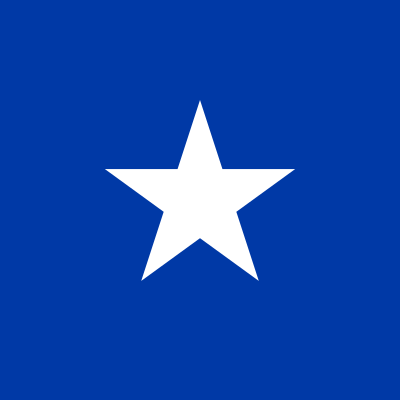
The white five-pointed star centered in Chile’s blue canton
Original GKBook illustration. Historical palettes and proportions are illustrative where no period specification is asserted.Download image
Illustrative reconstruction of Chile’s Patria Vieja flag, blue over white over yellow, 1812–1814
Original GKBook illustration. Historical palettes and proportions are illustrative where no period specification is asserted.Download image
Illustrative reconstruction of Chile’s 1817 transition flag, blue over white over red
Original GKBook illustration. Historical palettes and proportions are illustrative where no period specification is asserted.Download image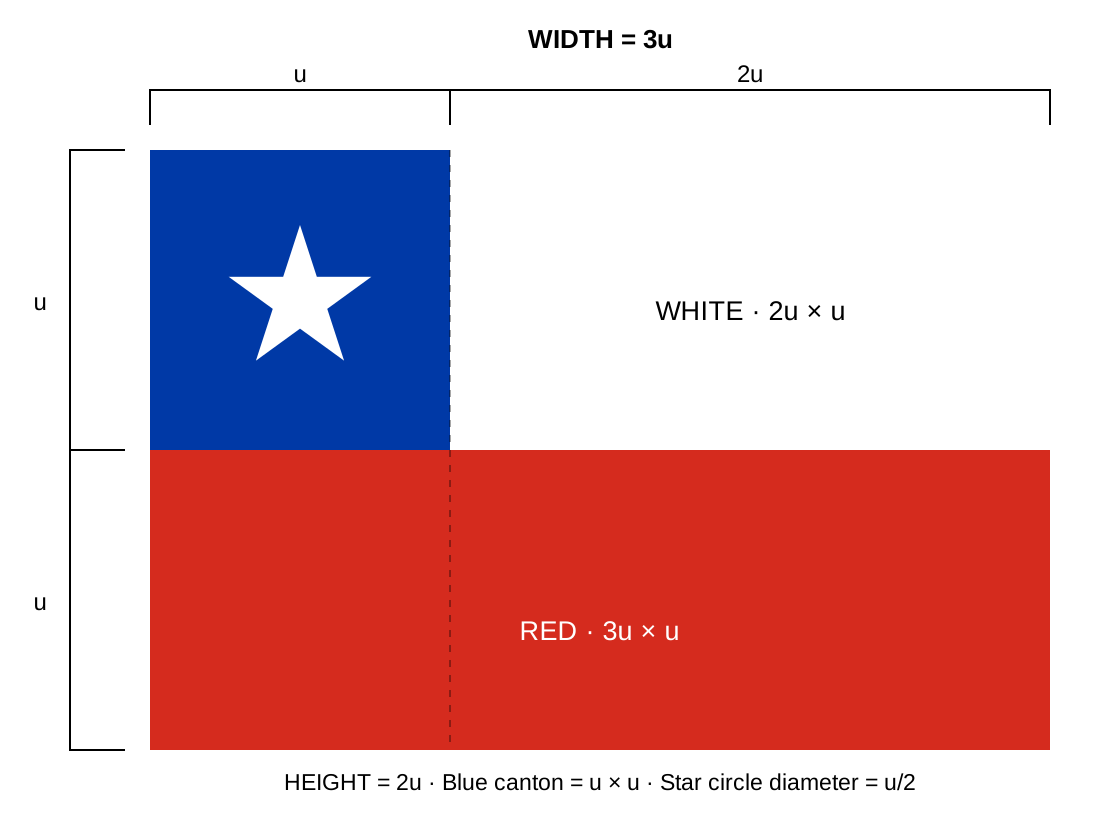
Chile flag construction: width 3u, height 2u, square blue canton u by u, and a star circle u over 2 across
Original GKBook illustration. Historical palettes and proportions are illustrative where no period specification is asserted.Download image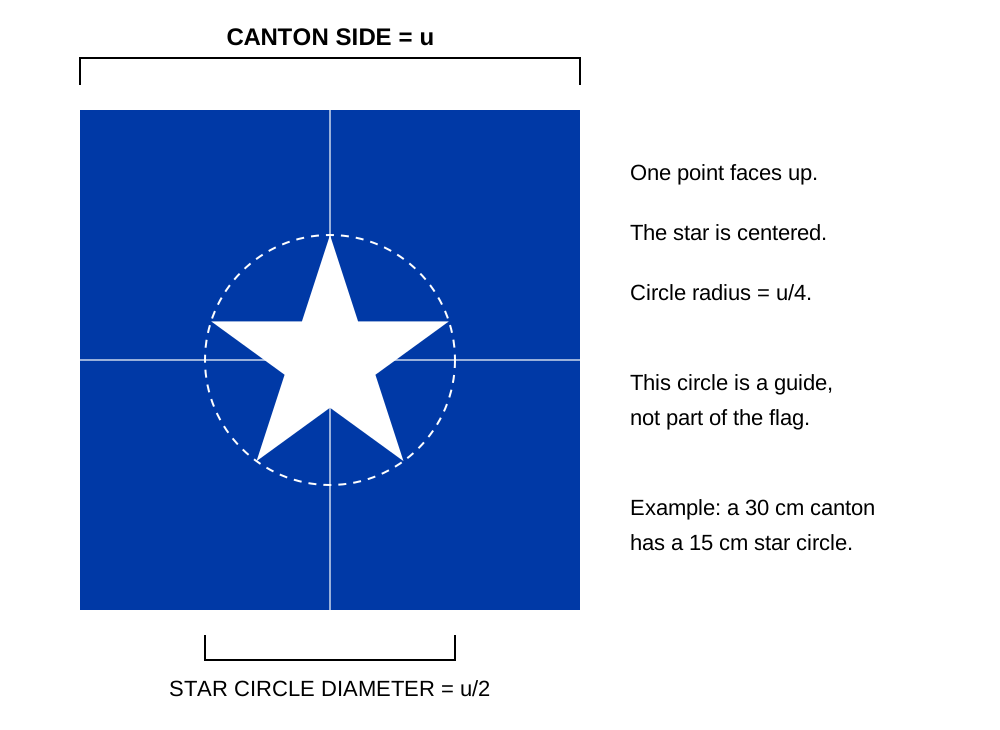
Star construction close-up showing a centered upright five-point star within a circle half the canton’s side
Original GKBook illustration. Historical palettes and proportions are illustrative where no period specification is asserted.Download image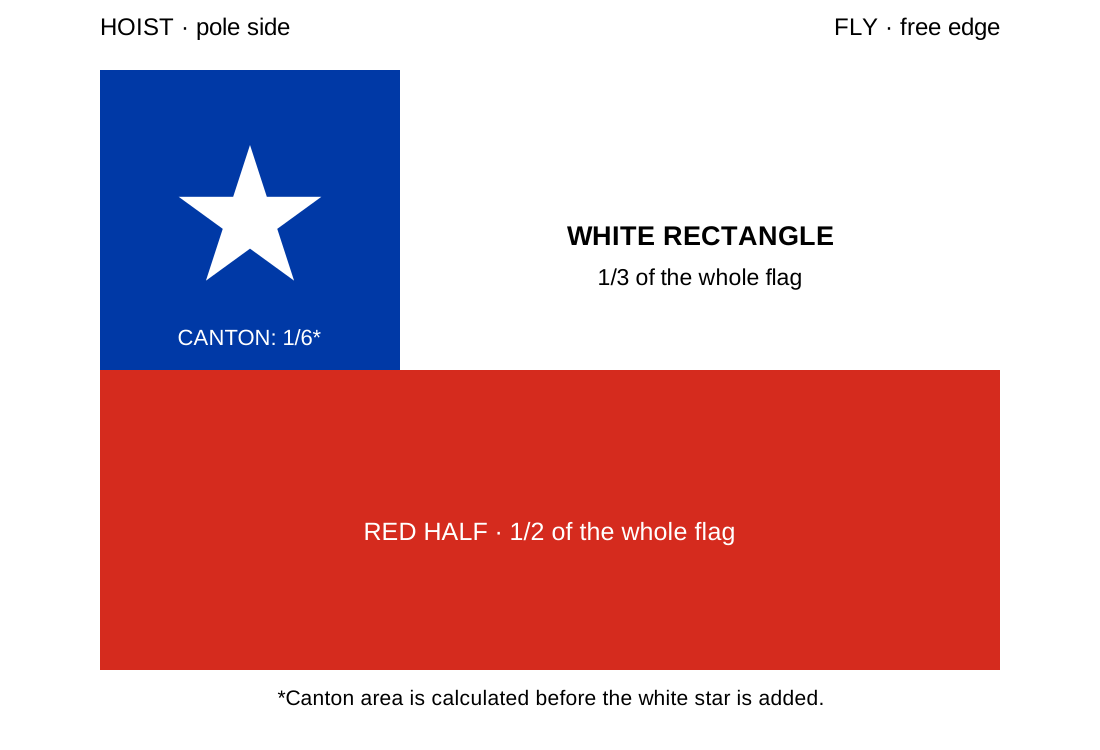
Chile’s flag anatomy: hoist and fly, white rectangle occupying one third, red half, and a blue canton occupying one sixth before the star is added
Original GKBook illustration. Historical palettes and proportions are illustrative where no period specification is asserted.Download image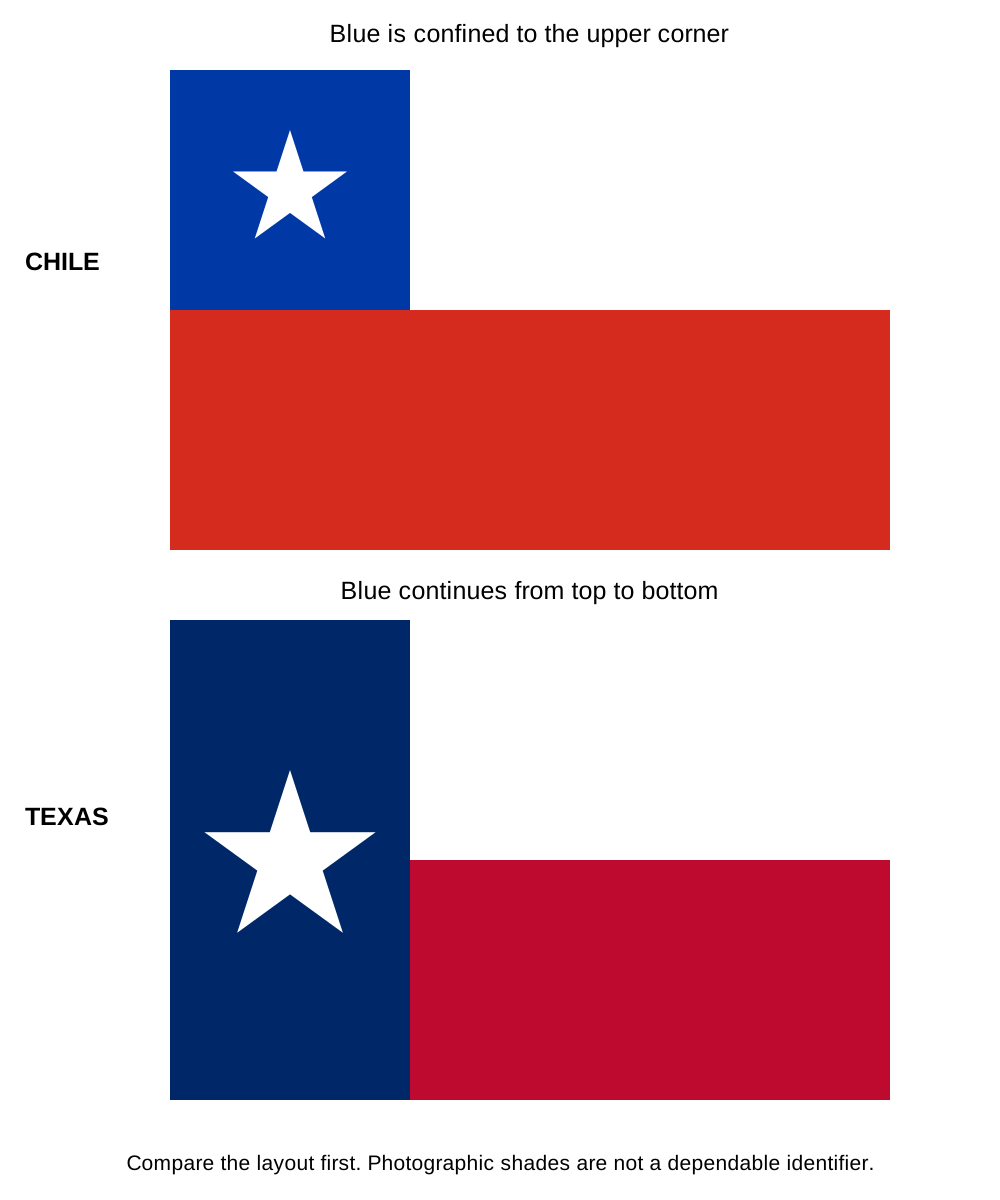
Chile and Texas compared: Chile’s blue square occupies the upper hoist corner, while Texas has a full-height blue stripe
Original GKBook illustration. Historical palettes and proportions are illustrative where no period specification is asserted.Download image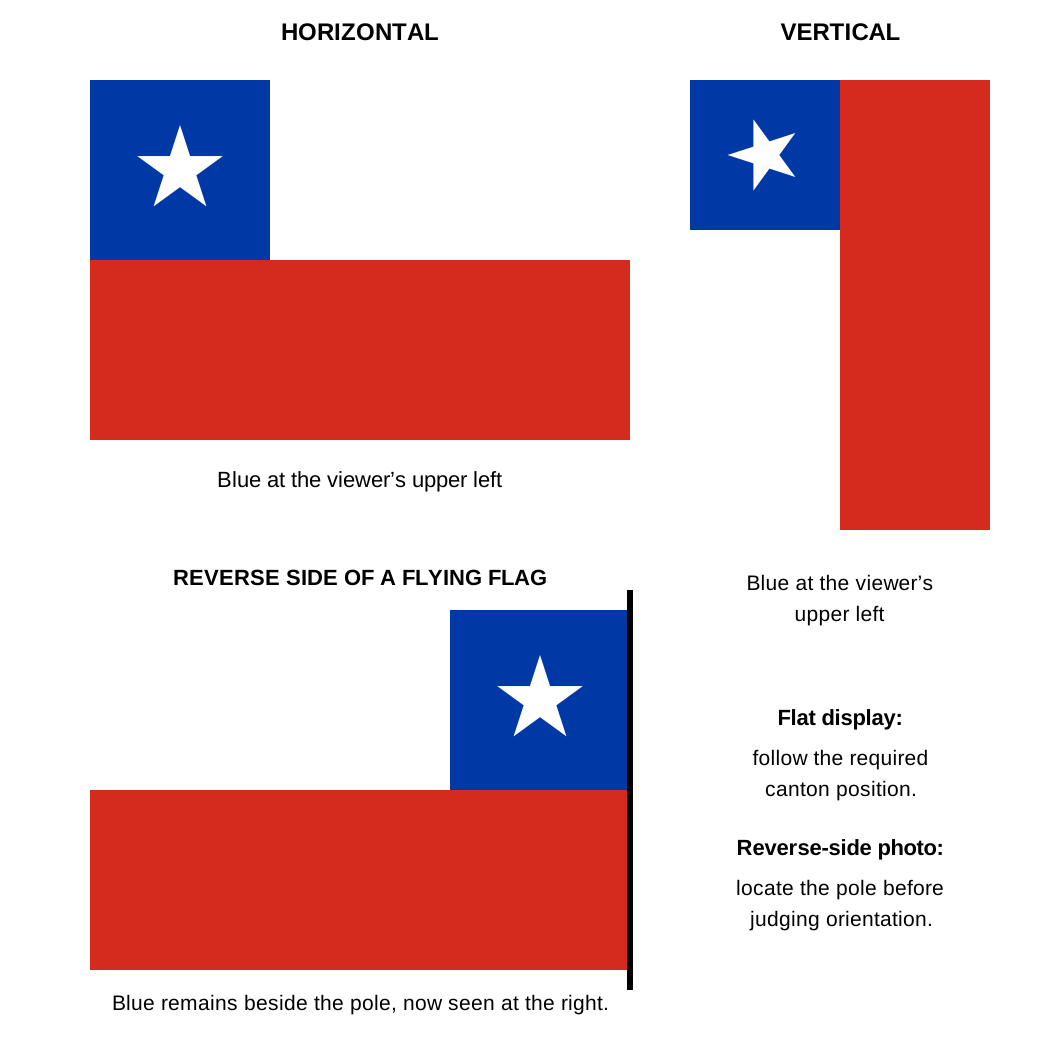
Chile flag display guide: flat horizontal and vertical displays put blue at the viewer’s upper left; a reverse-side view of a flying flag puts the pole at the right
Original GKBook illustration. Historical palettes and proportions are illustrative where no period specification is asserted.Download image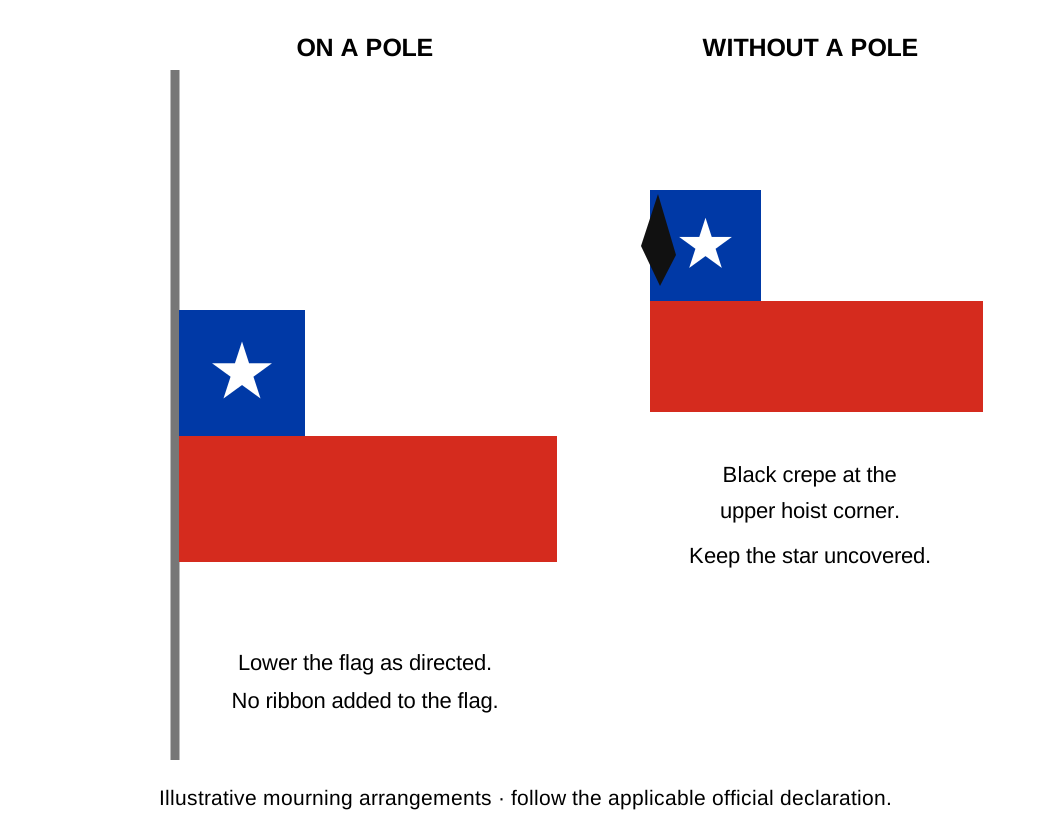
Illustrative Chilean mourning display: lowered flag without ribbon on a pole, and black crepe at the upper hoist when displayed without a pole
Original GKBook illustration. Historical palettes and proportions are illustrative where no period specification is asserted.Download image
Close-up of a Chilean flag showing the stitched white star and the joins between its blue, white, and red fabric.
Photo: Auztrel, public domain. Contrast-corrected Commons version converted to WebP.Download imageFrequently asked questions
What is Chile’s flag called?
Chile’s flag is commonly called La Estrella Solitaria, meaning the Lone Star. The name refers to the single white star inside its blue upper-hoist square. It identifies the Chilean national design, although Texas also uses a lone-star nickname for a different flag.
When was Chile’s flag adopted?
The familiar design dates to October 18, 1817, under Bernardo O’Higgins’s government. Later milestones include its association with the independence ceremonies in February 1818, the construction law of 1912, and the regulations of 1967. Those later dates should not replace the original adoption date.
What do Chile’s flag colors mean?
The familiar interpretation associates blue with the sky, white with Andean snow, and red with the blood shed for independence. Other official explanations connect blue with the Pacific Ocean. These interpretations explain national symbolism; they are distinct from the legal instructions defining the flag’s shape and arrangement.
What does the single star represent?
Unity and guidance are common interpretations of Chile’s star. Institutional accounts also discuss Indigenous star imagery and other historical meanings. The flag regulations define a single white five-pointed star, but do not provide one exclusive explanation that makes every other historical interpretation incorrect.
Does the star represent Chile’s regions?
The current flag does not function as a region-count chart. It has one five-pointed star, rather than a separate star for each administrative region. Its documented interpretations concern broader ideas such as unity and guidance, so a changing regional map is not a reason to alter the drawing.
What are the proportions of Chile’s flag?
The height-to-width ratio is 2:3. A flag 60 centimeters high is therefore 90 centimeters wide. Its blue canton is a 30-centimeter square, and the two horizontal halves are each 30 centimeters high. These example measurements are calculated from the specified proportions, not a mandatory retail size.
How large should the star be?
The star’s outer circle has a diameter equal to half the side of the blue square. In a canton 30 centimeters wide, the circle is 15 centimeters across. Center it inside the canton and draw the five-pointed star with one outer point facing upward.
Does Chile have official hexadecimal flag colors?
The general statutes cited here name azul turquí, white, and red without assigning hexadecimal values. The blue and red codes shown in this article identify its digital illustration palette. They should not be described as an official textile, printing, or screen-color standard established by those laws.
Who designed Chile’s flag?
The Foreign Ministry associates its conception with José Ignacio Zenteno and considers Antonio Arcos the probable designer, while noting an alternative attribution to Gregorio de Andía y Varela. This uncertainty should remain visible. The official who approved the flag and the person who made a ceremonial textile are separate roles.
What flag did Chile use before the Lone Star?
The immediate predecessor was the 1817 transition tricolor, with horizontal blue, white, and red bands. Earlier, the Patria Vieja flag used blue, white, and yellow. The change to the canton-and-star design was therefore more than replacing a color: it reorganized the field and introduced the distinctive emblem.
Why does the 1818 museum flag look different?
The surviving independence-oath flag is a decorated historical textile, with different oval emblems on its two faces and embellishment in its star. It should be interpreted as that specific ceremonial object. A plain modern construction drawing is not an exact reproduction of all its early details.
When is Chile’s Flag Day?
Chile’s Flag Day is July 9. It commemorates the soldiers who died at the Battle of La Concepción on July 9–10, 1882. It is different from October 18, the adoption anniversary, and from the September celebrations associated with required national-flag display.
Can the flag be displayed outside national holidays?
The current consolidated general regulation permits use or hoisting on ordinary days without prior authorization, while requiring respect for its display provisions. This is separate from the specifically required full-staff dates and from any special mourning declaration. A particular institutional ceremony may also have applicable protocol instructions.
How should Chile’s flag hang vertically?
For a flat vertical display, the blue square belongs at the viewer’s upper left, as it does in the prescribed flat horizontal display. Check the final orientation instead of automatically rotating an image clockwise. The illustration in this article separates that arrangement from the reverse view of a flying flag.
Why does blue sometimes appear on the right?
A photograph can show the reverse side of the same flag. In that view, blue remains beside the pole, but the pole may appear on the viewer’s right. Locate the pole and understand the viewing direction before deciding that a photographed flag has been mounted incorrectly.
Is Chile’s flag the same as the Texas flag?
No. Chile has a blue square only in the upper corner, so its red lower half reaches the pole. Texas has a full-height blue stripe beside the pole. The star sits within that different blue field. Compare this structural feature instead of relying on subtle color differences in photographs.
Can the Chile flag emoji represent Texas?
The Chile flag emoji identifies Chile. Its visual similarity to Texas does not change that identity, even when a small display makes the canton hard to see. An introduced Texas legislative resolution in 2017 addressed this exact confusion; it did not create a new national or state flag.
Does the national flag contain a coat of arms?
The ordinary current national flag is the plain canton-and-star design. The presidential standard is a separately defined use that adds the national coat of arms. The decorated independence-oath flag is another distinct historical object. Neither should be substituted without explanation for a standard modern Chilean flag.
What happens to the flag during national mourning?
The applicable declaration establishes the dates and scope of national mourning. The general regulations distinguish a lowered flag on a pole, without added ribbon, from a display without a pole, which uses black crepe at the upper hoist corner without covering the star. Follow the arrangement appropriate to the display.
Do the downloads include accurate construction diagrams?
Yes. The modern flag and its construction diagrams preserve the statutory proportions, square canton, and star-circle measurement described in the article. Historical predecessor drawings are explicitly labeled reconstructions. Keep those labels when explaining the pictures, and do not treat their illustrative shades as verified period manufacturing standards.

We Value Your Opinion Comments