
Grenada flag picture
Explore the construction sheet, the Independence Day connection, and the historical sequence.
| Country | GrenadaCaribbean state; capital St. George’s. |
|---|---|
| National design | Red border, triangles, stars, and nutmegGold upper/lower triangles; green side triangles; seven gold stars. |
| Proportions | Land 5:3; sea 2:1Both ratios are width:height, as listed by the Government of Grenada. |
| Adopted | February 7, 1974The present flag was introduced at independence. |
| Designer | Anthony C. GeorgeThe government identifies him with Soubise, St. Andrew. |
| Distinctive emblem | Nutmeg at the hoistA reference to Grenada’s spice-growing identity and Isle of Spice nickname. |
| Seven stars | Six border stars and one central starOfficial explanations differ; the detailed account is attributed in the article. |
| National observance | February 7 — Independence DayA separate annual Flag Day was not verified in the consulted official sources. |
Red, gold, and green frame seven stars and a nutmeg. The design was adopted at independence on February 7, 1974; official guidance distinguishes 5:3 on land from 2:1 at sea.
What is the flag of Grenada?
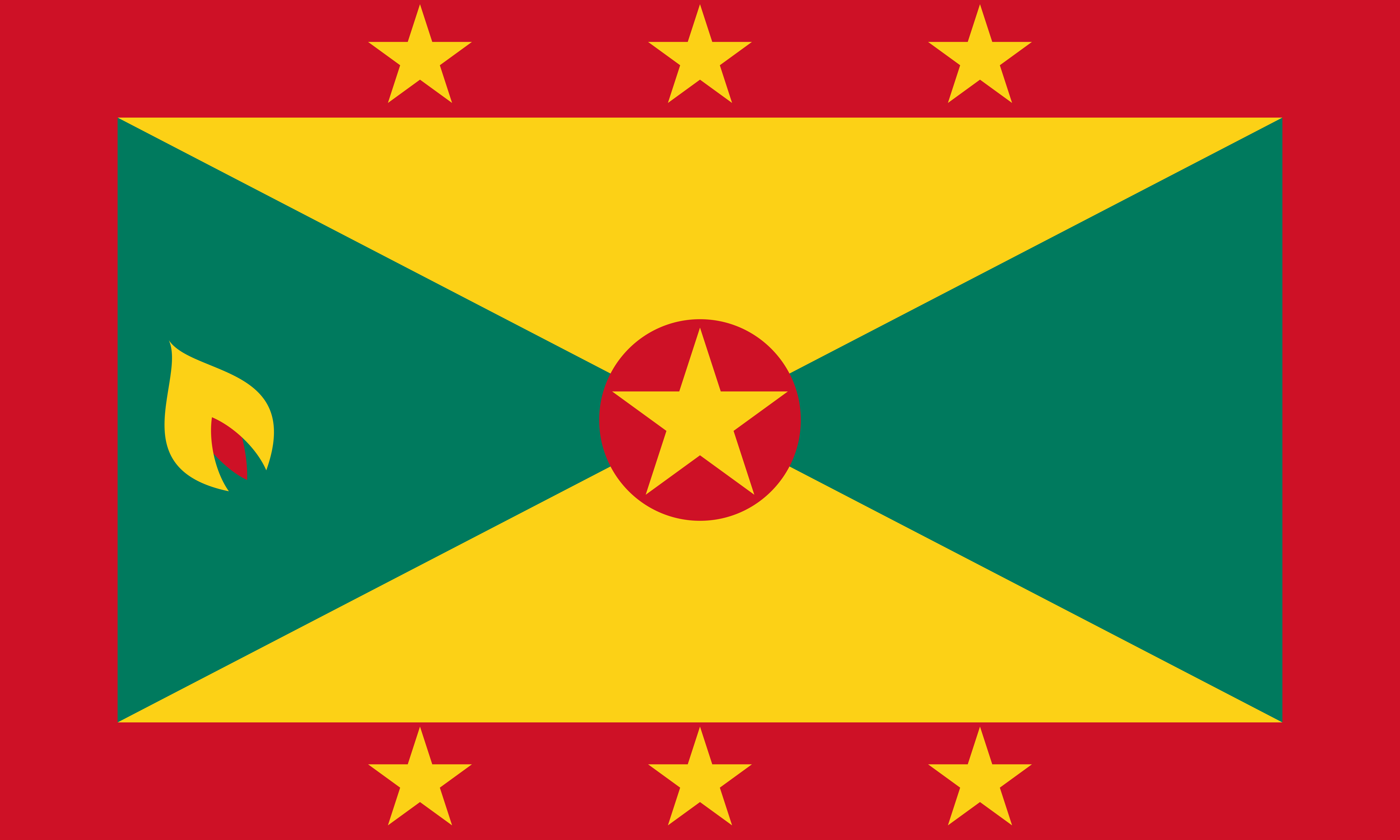
Grenada’s flag has a red border around four triangles: gold at the top and bottom, green at the sides. Six gold stars sit on the border and a seventh appears on a central red disk. A red-and-gold nutmeg symbol lies in the green triangle beside the hoist.
Grenada’s national flag combines a strong red frame with a divided green-and-gold center. The seven stars and small nutmeg make it especially distinctive among Caribbean flags. The design belongs to the independent state that came into being on February 7, 1974.
The standard land format and the wider sea format share those identifying features. A useful description therefore includes both the pattern and the intended setting. The plain image at the top of this page is the land reference, shown at 5:3 width:height.
Explore the nutmeg, seven stars, construction guide, historical sequence, and downloadable pictures.
How are the colors and symbols arranged?
The inner field is divided diagonally into four triangles that meet beneath the central disk. Three small gold stars run along the upper red border and three along the lower border. A larger gold star occupies the disk. The nutmeg belongs in the green triangle nearest the attachment edge.
The hoist is the edge attached to a staff or rope; the fly is the opposite, free edge. In an ordinary front-facing drawing, the nutmeg sits on the left in the green hoist triangle.
The red border surrounds the entire inner field. Its six stars form two horizontal groups of three. The larger center star is separate from those groups and lies on a red disk over the meeting point of the four triangles.
No writing, shield, crown, or black outline belongs in this reference. Gold is used for the stars and the upper and lower triangles, not only for the nutmeg.
What color values are used in the downloadable flag?
The supplied digital artwork uses red #CE1126, RGB 206, 17, 38; gold #FCD116, RGB 252, 209, 22; and green #007A5E, RGB 0, 122, 94. These are the actual reference-file fills. The government names the colors but the reviewed guidance does not authenticate these numerical codes as legal standards.
| Color | HEX | RGB | Where it appears |
|---|---|---|---|
| Red | #CE1126 | 206, 17, 38 | Outer border, center disk, and part of the nutmeg |
| Gold | #FCD116 | 252, 209, 22 | Upper/lower triangles, seven stars, and part of the nutmeg |
| Green | #007A5E | 0, 122, 94 | Hoist and fly triangles |
The official government description calls the colors red, gold, and green. “Yellow” is also often used when describing the visible gold areas, particularly in accounts of the older flag. Neither word implies that a metallic gold finish is required.
The SVG values above provide a reproducible reference for these downloads. They should not be relabeled as government-approved Pantone, CMYK, or textile dye numbers. Specialist references contain different suggested color matches, so a convenient digital value is not evidence of one universal manufacturing specification.
For a physical order, agree on the intended color reference and inspect the finished material under consistent lighting. Camera exposure, shadows, fabric folds, and screen settings can all change the apparent shade in a photograph.
What do Grenada’s flag colors and symbols mean?
The Government of Grenada connects red with courage and vitality, gold with wisdom and sunshine, and green with vegetation and agriculture. The red border also conveys unity. These are explanatory meanings attached to the national design; they should be distinguished from exact numerical color specifications for screens, printing, or fabric.
The nutmeg gives the design a specifically Grenadian agricultural association. The stars provide another layer of meaning, but their interpretation needs attribution because official public explanations are not identical.
Keep the distinction between visible design and explanatory meaning clear. The number and position of the stars can be checked directly against the reference; the significance assigned to them comes from the account being cited. The detailed comparison below preserves that distinction.
What is the nutmeg symbol on Grenada’s flag?
The small red-and-gold symbol near the hoist represents nutmeg. It connects the flag with Grenada’s agricultural identity and its Isle of Spice nickname. Although the stylized shape can resemble a flame or leaf at a glance, it should be reproduced as the complete nutmeg device rather than replaced with another symbol.
The device occupies the green triangle beside the hoist. In the supplied artwork it has a red inner form and a gold outer form. Their combination is a stylized national symbol, not a leaf, torch, flame, or clove.
At small sizes the fine boundary between its parts can become difficult to read. Use the vector master for enlargement and preserve the original shapes instead of substituting a generic spice icon. A botanical photograph helps explain the subject, but it does not replace the emblem’s designed outline.
The nickname Isle of Spice describes Grenada’s association with spices. It is not treated here as a previous constitutional name of the country, and no current world production ranking is inferred from the presence of nutmeg on the flag.
What do the flag’s seven stars represent?
Grenada’s consulates in Toronto and Miami explain the six border stars as the six parishes and the central star as St. George’s, the capital. The central government page instead refers collectively to seven parishes. Because these official accounts differ, the article attributes the wording rather than inventing a seventh mainland parish.
| Account | Border stars | Central star or collective meaning |
|---|---|---|
| Toronto and Miami consulates | Six parishes | St. George’s, the capital |
| Government National Symbols page | Discussed collectively | Refers to seven parishes and national aspirations |
St. George’s is the capital in the consular explanation, not an additional mainland parish created by the star count. The phrase “seven parishes” on the central government page should not be expanded into a fabricated list.
Another account comes from the designer’s memoir as reported in his obituary: it connects the center star with sovereignty and the border stars with navigation. That is a reported personal explanation, distinct from the consular geographical reading. The article does not pretend that all these accounts use exactly the same symbolism.
For identification, count three stars at the top, three at the bottom, and one in the center. Every star has five points, and the central one is larger in the reference.
What are the land and sea proportions?
The Government of Grenada lists 5:3 width:height for use on land and 2:1 for use at sea. A land flag is therefore about 1.667 times as wide as it is high, while the sea format is twice as wide. State which format is intended before ordering or resizing artwork.
All ratios on this page are stated as width:height. A source using height:length would express the same land proportion as 3:5 and the sea proportion as 1:2. That reversal of notation does not indicate another flag.
The distinction matters when comparing photographs or ordering a replacement. A wider sea flag should not automatically be called an incorrect land flag, and a 5:3 reference should not be advertised as the only proportion appearing in official guidance.
How is the land flag constructed in this reference?
The land reference uses a 500-by-300 coordinate grid with a 42-unit red border. Its center is (250, 150), where a red disk of radius 36 carries the larger star. These measurements describe the supplied digital drawing; they are not presented as an authenticated statutory construction sheet for every official flag.
| Element | Reference coordinates or size | Practical meaning |
|---|---|---|
| Outer rectangle | 500 × 300 | 5:3 width:height |
| Red border | 42 units on each side | Inner field runs from (42, 42) to (458, 258) |
| Triangle meeting point | (250, 150) | Hidden beneath the central disk |
| Red central disk | Center (250, 150); radius 36 | Diameter 72; remains a circle |
| Central star | Outer radius 33 | Top point at y = 117 |
| Border-star centers | x = 150, 250, 350; y = 21 and 279 | Three above and three below |
| Border stars | Outer radius 19.5 | One point faces upward |
| Nutmeg | Two complete source paths at the hoist | Scale with the full flag; preserve both shapes |
The SVG download is 3000 by 1800, a uniform sixfold enlargement of the coordinate reference. The large PNG is 6000 by 3600, a twelvefold enlargement. At that PNG size, the border is 504 pixels wide and the central disk has a radius of 432 pixels.
The inner triangles are formed by diagonal lines between the inner rectangle’s corners. They meet at the center under the disk; the diagonals do not extend through the red border. The gold triangles occupy the upper and lower sectors, and green occupies the side sectors.
These precise coordinates make the supplied file reproducible. They do not resolve differences among every published construction drawing. An official procurement drawing, if supplied for a particular order, should be checked on its own terms.
What finished sizes can be calculated from those ratios?
For land use, examples include 100 by 60 centimeters or 150 by 90 centimeters. For sea use, 200 by 100 centimeters preserves the 2:1 format. These are calculations from the stated ratios, not a verified official size schedule. Scale the complete design uniformly and account separately for hems or sleeves.
| Setting | Width × height | Calculation |
|---|---|---|
| Land | 100 × 60 cm | 100 ÷ 60 = 5 ÷ 3 |
| Land | 150 × 90 cm | 150 ÷ 90 = 5 ÷ 3 |
| Land | 200 × 120 cm | 200 ÷ 120 = 5 ÷ 3 |
| Sea | 200 × 100 cm | 200 ÷ 100 = 2 |
| Land SVG | 3000 × 1800 | Uniform enlargement of 500 × 300 |
| Land PNG | 6000 × 3600 pixels | Uniform enlargement; no stretching |
| Sea SVG | 3000 × 1500 | Uniform enlargement of the sea reference |
For a land flag of finished height H, width equals 5H/3. For the sea format, width equals 2H. Apply that relationship to the visible national rectangle, then plan sleeves, seams, reinforcement, and shrinkage separately.
The examples are not a claim that Grenada mandates these particular stock sizes. They provide a straightforward way to check an order or a digital placement against the two published ratios.
How does the sea reference differ from the land artwork?
The sea flag uses the same recognizable colors and symbols in a wider 2:1 rectangle. The downloadable sea reference is a separate complete drawing with circular central disk and correctly shaped stars. Stretching the land artwork horizontally would distort those features, so choose the appropriate master before scaling it.
The sea SVG is based on a 600-by-300 reference, while the land drawing uses 500 by 300. Both are enlarged uniformly. The sea drawing consequently has more horizontal room without turning the disk into an ellipse or widening each star.
Specialized coast-guard ensigns are a separate topic from this wider national flag. Historical specialist accounts discuss additional service patterns, but they are not used here to invent an operational construction sheet or to alter the national sea reference.
How did Grenada’s flag develop over time?
Grenada’s flag history includes British colonial ensigns, a blue-yellow-green associated-state flag used from 1967 to 1974, and the present independence flag adopted on February 7, 1974. Those stages reflect different political settings. The historical illustrations are modern reconstructions, while the current land and sea designs are presented separately.
Specialist flag histories describe a British Blue Ensign with a sugar-mill badge.
A later colonial badge depicts a ship. Maritime continuation and end dates should not be reduced to one unqualified nationwide replacement date.
Blue, yellow, and green horizontal bands surround a central nutmeg device in a white oval.
The present red-bordered design by Anthony C. George is introduced at independence.
The colonial ensigns belonged to a different constitutional setting from an independent national flag. Their badges should not be reconstructed from memory by replacing the detailed scene with a generic ship or factory icon.
The 1967 flag is a useful visual bridge because it already includes nutmeg. Independence brought a substantially different arrangement: the red border, seven stars, green side triangles, and gold upper and lower triangles replaced the horizontal tricolor.
A political event and a flag-design change are different kinds of milestone. A timeline should identify a documented change to the flag rather than assume that every change of government produced a new national pattern.
What did the 1967–1974 flag look like?
During the associated-state period, Grenada used three horizontal bands of blue, yellow, and green with a central nutmeg device in a white oval. The supplied reconstruction preserves its complete emblem and native 3:2 rectangle. It is a historical predecessor, not an alternate version of today’s red-bordered national flag.
The blue stripe is uppermost, yellow is in the middle, and green is lowermost. A white oval with a red outline carries the central nutmeg device. That arrangement differs from placing the modern nutmeg directly in a green hoist triangle.
Historical accounts and modern drawings vary in their rendering of the old central emblem. The supplied image is therefore identified as a reconstruction, not a photograph of an original government textile or an authenticated construction master.
Its native dimensions are 450 by 300, giving a 3:2 reference. Preserve that proportion when using this particular reconstruction instead of stretching it to match the present land flag’s 5:3 rectangle.
When was the present flag first raised?
Grenada adopted the present national flag on February 7, 1974, when it became independent from the United Kingdom. The Grenada National Museum dates the first raising to midnight as that day began. The adoption date belongs to the flag’s history; it is different from the creation date of a modern digital drawing.
The government’s National Symbols page identifies February 7, 1974 as the introduction of the flag at independence. The National Museum’s independence exhibit identifies the first raising at midnight as that date began.
This establishes a clear relationship among the national anniversary, independence, and adoption. It does not establish the exact day on which every sketch was produced or the detailed selection procedure. Those questions require separate archival evidence.
A modern SVG upload date records the history of that digital file. It must not be substituted for the historical adoption date of the national symbol.
Who designed the flag, and what is known about him?
Anthony C. George designed Grenada’s national flag. The government identifies him with Soubise in St. Andrew. A 2024 obituary gives his full name as Anthony Conrad George and records his birth in Carriacou in 1938. His authorship of the national design is distinct from later contributors who created digital reproductions.
George was born on January 7, 1938 in Carriacou and moved to the mainland as a child. The government’s identification of Soubise in St. Andrew refers to his association with that community; it does not contradict a Carriacou birthplace.
Linda Straker’s February 2024 obituary reports his British Empire Medal in 2007 and the naming of A C George Road in Soubise in 2012. He died in the United Kingdom on February 7, 2024, the fiftieth anniversary of independence.
The same obituary draws on his 2013 memoir, Beyond Belief, when discussing his personal explanation of the stars. That report is distinct from a direct examination of the memoir. Later vector contributors reproduced an established design; they are not credited here as the original national flag’s designers.
How should the flag be prepared for manufacture?
Choose the correct land or sea proportion, retain all seven stars and the complete nutmeg, and keep the center disk circular. Use suitable fabric and durable reproduction methods for the intended setting. These are practical production principles; the reviewed official page does not establish a complete material specification or procurement standard.
Start with the intended setting. A 5:3 land master and a 2:1 sea master are different files, not interchangeable aspect-ratio settings for one flattened image. Enlarge the chosen reference uniformly so that every star, triangle, and part of the nutmeg keeps its shape.
For a textile, allow for the attachment method and finished dimensions. Reinforcement at the hoist, hems at exposed edges, and a suitable fabric weight are practical production considerations. They should not be confused with a verified Grenadian regulation prescribing one fiber, weave, seam count, or printing process.
Review a sample at the size at which the flag will be seen. A small nutmeg needs enough detail to remain recognizable, and the six border stars should remain distinct. Do not increase readability by omitting the device or turning the seven stars into decorative dots.
The digital files are reference artwork. They do not certify a finished product for an official purchase, and the measured internal grid should not be represented as an authenticated government procurement drawing.
What official display and handling guidance is available?
Grenada’s official guidance calls for respectful treatment, keeping the flag off the ground or floor, and avoiding purely decorative uses on temporary or discardable objects except for state occasions. It also addresses official buildings, nighttime display, and precedence. Read those provisions with their exceptions instead of converting every recommendation into an absolute rule.
Respect the emblem. The government’s guidance addresses treatment of the actual flag, including keeping it clear of the ground or floor.
Consider the object and occasion. Its statement about temporary or discardable decoration has a state-occasion exception. The text should not be reduced to an invented universal rule covering every possible illustrated object.
Identify the installation. The guidance names government and municipal buildings and their main administrative premises. Those settings matter when reading its recommendations about raising and lowering.
A respectful display requires enough clearance for the cloth to fly without dragging or striking nearby surfaces. That is practical implementation of the general principle, not a newly asserted technical distance or statutory penalty.
The published page is used here as official guidance. It is not labeled a consolidated National Flag Act, and no unverified offense, fine, or imprisonment term is added.
What does Grenada’s guidance say about day and night display?
Government guidance generally says the flag should not be flown after sunset except inside a building, but allows outdoor display on important ceremonial occasions, with floodlighting if possible. For government and municipal buildings, it recommends lowering at sundown and raising at 8 a.m. if possible. The qualifying wording matters.
| Situation | Published guidance | Qualification |
|---|---|---|
| Ordinary outdoor display | Generally not after sunset | Indoor display is an exception |
| Important ceremonial occasion outdoors | After-sunset display is permitted | Floodlit if possible |
| Government or municipal building | Lower at sundown; raise at 8 a.m. | Expressed as a recommendation if possible |
The same page contains both the general sunset statement and the ceremonial exception. Keeping them together prevents a photograph of an illuminated evening ceremony from being treated automatically as proof of improper display.
The words “if possible” also matter. They should not be silently converted into an unconditional offense or used to invent a lighting intensity standard. For an official event, follow the responsible institution’s arrangements for that occasion.
Where does the nutmeg belong in front and reverse views?
In the usual front-facing horizontal illustration, the nutmeg is in the green triangle at the left, beside the hoist. Viewed from the reverse of a free-flying flag, it appears on the right beside the same attachment edge. Mirror the whole design for that view; do not move the nutmeg alone.
Unlike a perfectly symmetrical flag, Grenada’s has a small feature that identifies the hoist. The nutmeg’s apparent side depends on whether the viewer is looking at the front or the back of a free-flying flag.
For an ordinary horizontal illustration, use the supplied master with the hoist at left. For a reverse-view diagram, mirror the complete flag. Moving only the nutmeg would create a different arrangement rather than a faithful reverse.
No separate official vertical-banner construction was verified in the consulted guidance. A photograph of folded or draped cloth also should not be treated as a flat geometry template. Keep the national artwork intact and use the appropriate institutional instructions for a ceremonial installation.
How does the guidance address other flags?
The government’s guidance says another flag should not be placed above or to the right of Grenada’s national flag, with exceptions for foreign embassies, consulates, and missions. The reviewed wording does not define the viewing direction for right. A ceremony organizer should apply the appropriate protocol to the actual arrangement.
The exception for foreign diplomatic premises is part of the government’s published rule and should remain visible in any summary. A domestic ceremony and a foreign embassy are not automatically the same protocol setting.
Left and right can be described from different viewpoints: from a speaker, a procession, an audience, or the flags themselves. Because the reviewed text does not specify that viewpoint, this page does not supply a deceptively precise audience-left or speaker-right drawing.
For a real installation, establish the applicable ceremonial perspective before deciding placement. Do not import another country’s platform diagram and present it as Grenadian protocol.
When is Grenada’s Independence Day celebrated?
February 7, Independence Day, is the clearest annual national occasion connected with Grenada’s flag because independence and adoption of the current design occurred together in 1974. The consulted official sources did not establish a separate annual Flag Day. A flag-raising event should be identified by its actual occasion and date.
Independence Day provides a firm, documented destination for readers interested in the flag’s national observance. A flag-raising ceremony on that anniversary celebrates the country and its independence symbol.
February 7, 2024 marked fifty years since independence. That anniversary does not alter the adoption date or prove that a new design was introduced. Similarly, a particular year’s ceremony schedule should not be copied forward as an evergreen timetable.
The National Museum’s account identifies the first raising at midnight in 1974. The article does not invent a different annual Flag Day to fill a calendar entry.
When is Grenada’s flag lowered for mourning?
Grenada uses half-mast display during announced periods of mourning. Official notices for former governor-general Sir Carlyle Glean in 2021 and 2022 provide documented examples, including a defined period around his funeral. Read the relevant announcement for its dates and scope; an archived notice is not an instruction to lower flags today.
A December 21, 2021 government release announced that national flags on all buildings would be flown at half-mast for seven days after Sir Carlyle Glean’s death, and again during the week of his funeral. A later release supplied the funeral-period dates.
This sequence shows why an initial mourning announcement and a subsequent funeral notice should be read together. They are related instructions for a particular event, not evidence that every future mourning period must last exactly seven days.
The examples below are historical. The page does not announce an active mourning period or direct readers to lower a flag now.
What did the funeral-period notice in 2022 require?
A government announcement for Sir Carlyle Glean’s state funeral specified half-mast display from sunrise on Sunday, January 16, 2022, through sundown on the funeral day, Tuesday, January 18. This dated example shows how a mourning instruction supplies a beginning and end. It is not a permanent annual observance.
The January 12, 2022 Government Information Service announcement placed the state funeral on January 18. Its half-mast period began at sunrise on January 16 and ended at sundown on January 18, the funeral day.
The operational detail is the defined beginning and end. A general expression of national mourning does not supply those details by itself, and the exact period should not be inferred merely from the date of death.
This was an instruction for that completed occasion. It should not be converted into a recurring January observance, a current alert, or an automatic entitlement to particular funeral honors.
Does the official notice prescribe an exact half-mast measurement?
The reviewed Grenadian notices call for half-mast display without defining a numerical fraction for the top, center, or bottom of the cloth. The accompanying diagram therefore illustrates a lowered position conceptually. Follow the responsible institution’s technical directions for a particular pole and ceremony instead of importing a measurement from another country.
A diagram can show a flag lower on a staff without placing its center at a mathematically exact halfway point. Here the drawing communicates mourning and deliberately avoids presenting an unsupported dimension as law.
The reviewed notices also do not supply a universal black-ribbon length, a prescribed folding sequence, or a complete flag-draped funeral procedure. Those questions are separate from the instruction to lower flags during the stated period.
How should the flag be maintained and stored?
Keep the flag clean, prevent it from touching the ground, and repair or replace damaged cloth as appropriate. Follow the textile’s care instructions and dry it before storage. Apart from the government’s respectful-handling guidance, these are practical care suggestions; no mandatory Grenadian folding pattern or retirement ritual was verified.
Inspect the attachment points and fly edge for wear. Allow the cloth enough space to move without rubbing against rough surfaces, and follow the manufacturer’s cleaning directions. Dry storage helps avoid damage to a flag that will be used again.
A historically important textile may need conservation care instead of ordinary washing or repair. Treat a museum object differently from a replaceable outdoor flag whose fabric has become badly worn.
The consulted official page does not establish one mandatory retirement ceremony. This article therefore does not prescribe burning, a triangular fold, or a ritual speech as a Grenadian requirement.
What do the image permissions mean for reuse?
No. Permission to reuse a particular drawing or photograph concerns its copyright status. It does not by itself establish government endorsement, trademark clearance, or compliance with national-symbol rules. The package identifies its image rights, while a proposed product, logo, or advertisement may require a separate assessment of the intended use.
The national and historical reference drawings used here have public-domain provenance. The explanatory compositions are released under CC0. The photograph credits identify their separate status, including the U.S. federal photograph’s public-domain status in the United States.
Those statements concern the files. They do not turn an educational download into a government endorsement. Trademark protection for state emblems, including the Article 6ter framework described by WIPO, is a different issue from copyright in a drawing.
The reviewed Grenadian guidance is not used to invent a blanket advertising ban or a current penalty amount. Consider the proposed use on its own terms, especially where a design could imply official sponsorship.
Is Grenada’s coat of arms on the flag?
No. Grenada’s national flag contains the triangles, border, seven stars, central disk, and nutmeg, without the full coat of arms. The coat of arms is a separate national emblem with a shield and supporting figures. Adding that emblem to the plain flag would change the design shown in the national reference.
The coat of arms combines a shield, a gold cross, a ship, and other heraldic elements with supporters and a motto. It is a more elaborate national emblem than the flag’s nutmeg and stars.
A government document or seal may therefore display an emblem that is absent from the ordinary flag. That does not mean the plain national reference is unfinished. Do not add the arms to its central disk or replace the nutmeg with the entire shield.
The flag, coat of arms, anthem, and pledge are related national symbols with different forms and uses. The anthem’s lyrics are not reproduced here.
How does Grenada’s flag differ from similar flags?
Look for Grenada’s red border, seven gold stars, and small nutmeg beside the hoist. Guyana uses nested triangles, Jamaica uses a gold diagonal cross with green and black fields, and Suriname uses horizontal bands with one central star. Their shared colors do not make their geometry or symbolic explanations interchangeable.
| Flag | Width:height in these references | Quick identification |
|---|---|---|
| Grenada | 5:3 | Red border; seven stars; hoist-side nutmeg |
| Guyana | 5:3 | Nested red and gold triangles with black and white borders on green |
| Jamaica | 2:1 | Gold diagonal cross; green top/bottom; black sides |
| Suriname | 3:2 | Green, white, red, white, green bands; one gold star |
Guyana and Grenada can be confused in tiny images because both use triangular geometry and red, gold, and green. Look first for Grenada’s red border and repeated stars. Guyana’s triangles point toward the fly rather than meeting in four equal sectors under a central disk.
Jamaica has a gold saltire dividing its field, with no stars or nutmeg. Suriname has a single central star on a broad red horizontal band. Preserve those distinguishing details instead of forcing every comparison into a common rectangle.
What is Grenada’s flag emoji?
Grenada’s flag emoji is 🇬🇩. It combines regional indicator G, U+1F1EC, with regional indicator D, U+1F1E9, corresponding to the country code GD. The appearance depends on the device or application. Use the provided SVG or PNG when consistent proportions, complete symbols, and specified digital reference colors are needed.
The underlying Unicode sequence is U+1F1EC U+1F1E9: the regional indicators G and D. Together they correspond to GD. A platform that does not render the flag sequence may show letters or another fallback.
Emoji artwork can be flat, shaded, or apparently waving. It is useful in text but unsuitable as a manufacturing master. The local vector download gives consistent geometry and preserves the nutmeg’s complete outline.
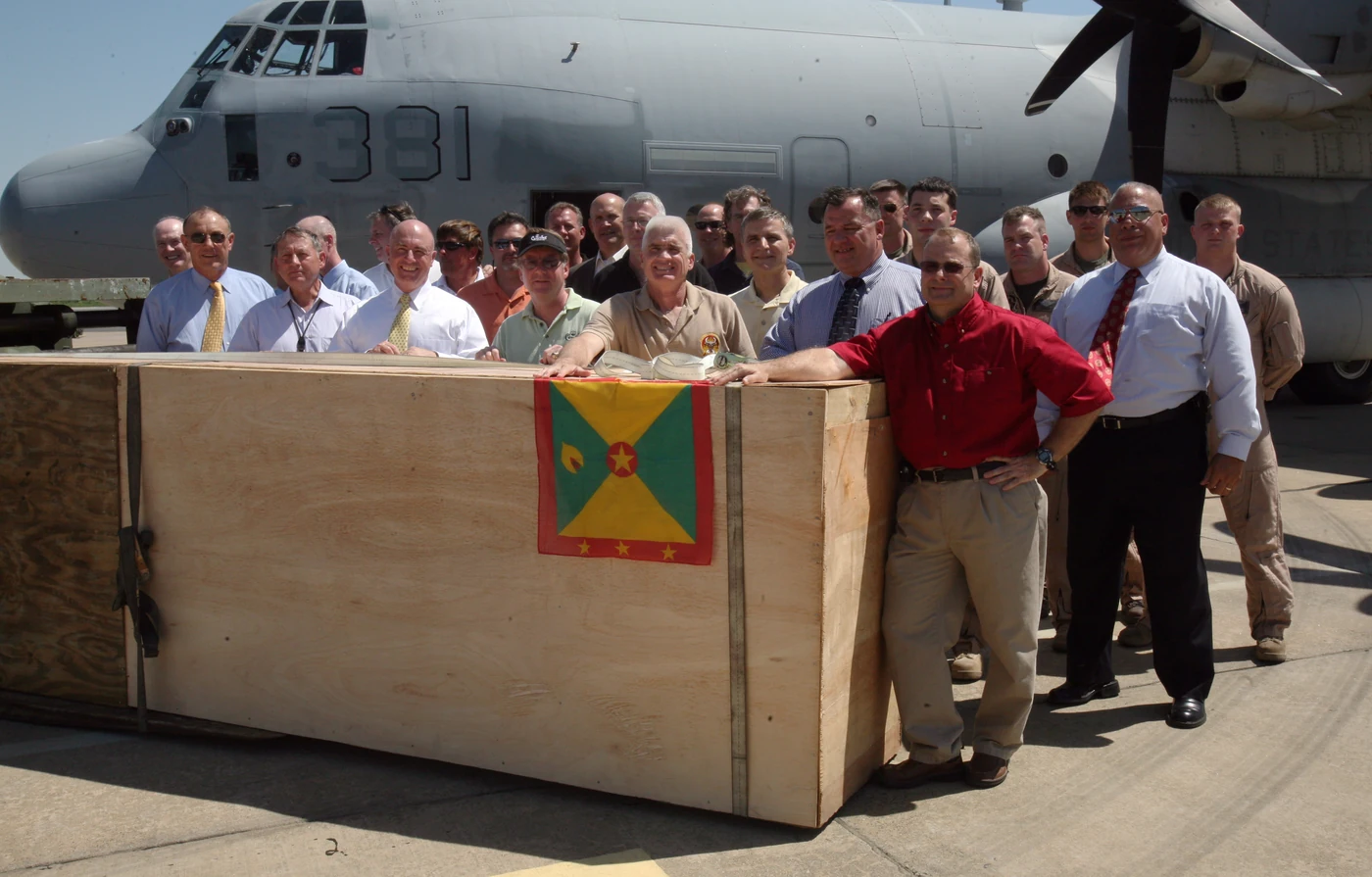
What does the Quantico photograph show?
The photograph shows a Grenada flag draped over a crate at Marine Corps Base Quantico in April 2009, with a group posed behind it. The Marine Corps caption connects the crate with a helicopter component returned from Grenada. This is a dated documentary scene, not a flag construction or color standard.
The original Marine Corps file records the return of a helicopter component from Grenada. The flag is draped over the front of the crate in the group photograph. The caption and file date differ by one day, so the public caption uses the supported month and year rather than silently choosing between them.
The individual photographer is not named in the reviewed file record. The credit therefore identifies the U.S. Marine Corps without inventing a personal attribution. Nor are the people in the frame identified from their appearance.
The full frame is retained in the local WebP versions. Folding and draping hide part of the flag, so the photograph supplies historical context rather than a complete flat pattern or a calibrated color sample.
How does the nutmeg photograph help explain the emblem?
Nutmeg and mace come from different parts of the same seed structure: nutmeg is the seed spice, while mace comes from its colored aril, or outer covering. The close-up photograph shows the red aril around the seed. It explains the agricultural subject without turning the flag’s stylized emblem into a botanical diagram.

The red network in the photograph is the aril surrounding the seed. Kew’s botanical descriptions distinguish the large seed from this colored covering. That distinction explains why nutmeg and mace are related spice names rather than two unrelated plants.
The photograph is credited to Raerah. Its reviewed file record does not establish a location, so it is not captioned as a Grenadian farm, harvest, or market scene. It illustrates the subject of the national symbol without making an unsupported geographical claim.
The flag’s compact red-and-gold device is deliberately stylized. Compare the photograph with the emblem detail to distinguish the real agricultural subject from the designed national mark.
What errors are common in Grenada flag illustrations?
Keep three border stars above, three below, and one larger star on the central disk. Preserve gold upper and lower triangles, green side triangles, and the complete nutmeg near the hoist. Do not omit the red border, stretch the central circle, substitute the coat of arms, or confuse land and sea proportions.
Check the whole pattern
Count seven stars, verify the red frame, and check the gold top and bottom triangles. Then inspect the nutmeg and the center disk. A correct palette cannot compensate for a missing symbol or a distorted circle.
Do not treat the 1967 horizontal tricolor as a current alternative. Label it by its historical period. Likewise, distinguish the 5:3 land reference from the 2:1 sea format before deciding that a drawing has the wrong proportions.
A mirrored reverse view is not the same as an upside-down flag. The nutmeg stays beside the attachment edge; the complete design changes apparent sides together. Keep explanatory labels and measurement lines outside the plain national rectangle.
Which Grenada flag downloads are included?
The package contains a plain national SVG and large PNG, a separate sea flag, the associated-state predecessor, and diagrams of layout, nutmeg, stars, construction, sizes, orientation, history, Independence Day, and mourning. A comparison sheet and two photographs add context. Every gallery download points to a local file on GKBook.
Download the plain land SVG or the 6000 × 3600 PNG. The separate sea SVG preserves the 2:1 maritime reference.
The gallery supplies individual downloads for the explanatory sheets, associated-state reconstruction, comparison, and photographs. The diagrams keep their labels outside the flag, and the historical artwork is identified by its period.
Download the plain-text image credits. They identify the public-domain sources and CC0 compositions without adding outbound navigation to the article.
Grenada flag pictures
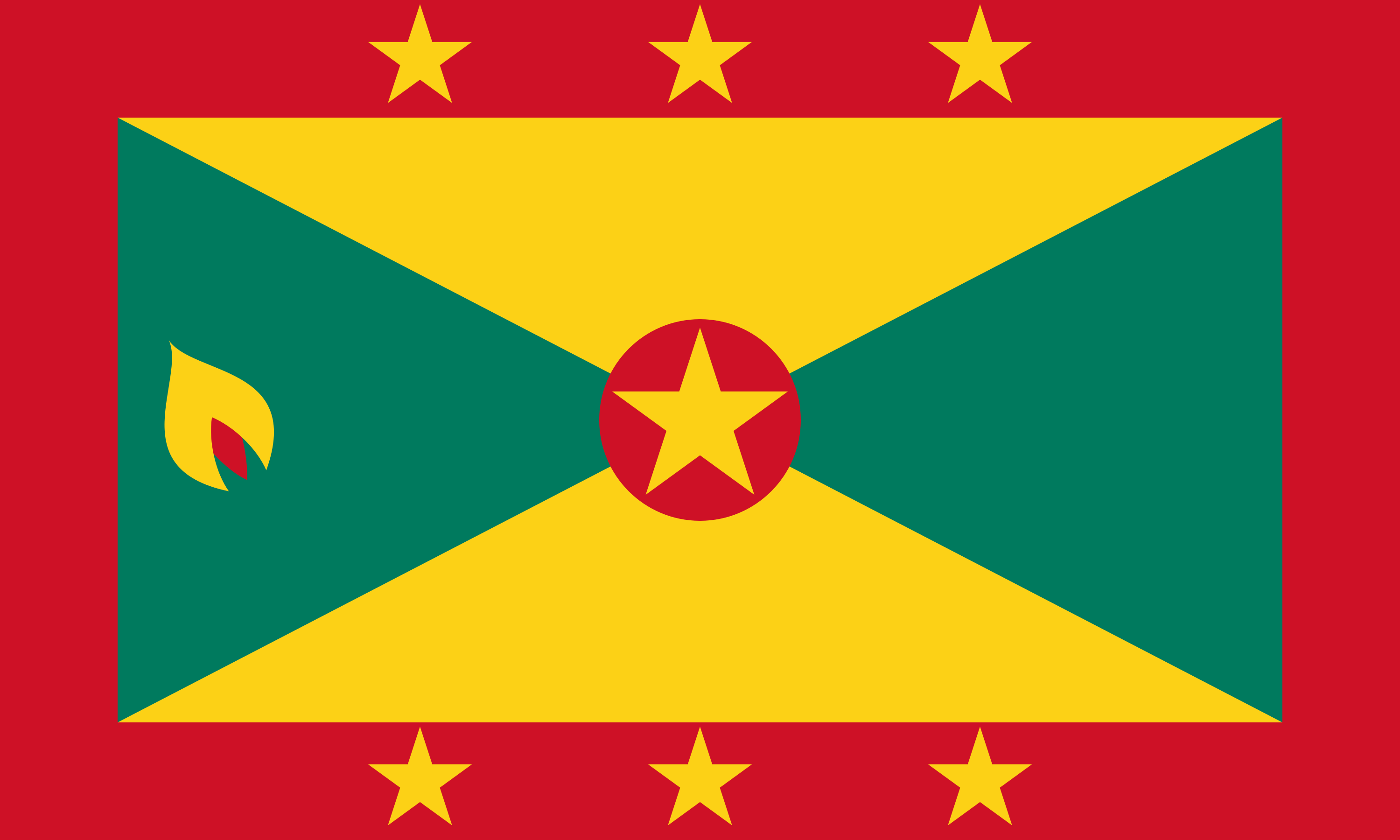
Grenada’s land flag has a red border, gold and green triangles, seven gold stars, and a nutmeg symbol at the hoist. Its proportions are 5:3 width:height.
GKBook composition, CC0; underlying flag geometry, public domain.Download image
The red border carries six gold stars, and a seventh star sits on a red central disk. The upper and lower triangles are gold; the side triangles are green. A nutmeg appears beside the hoist.
GKBook composition, CC0; underlying flag geometry, public domain.Download image
The flag’s red-and-gold nutmeg symbol is enlarged against green, with its complete reference paths preserved. It represents Grenada’s spice-growing identity; the stylized emblem is not a botanical cross-section.
GKBook composition, CC0; underlying flag geometry, public domain.Download image
Six gold stars are arranged three above and three below; one larger gold star appears on the red center disk. Grenada’s consulates in Toronto and Miami connect the border stars with six parishes and the center star with St. George’s.
GKBook composition, CC0; underlying flag geometry, public domain.Download image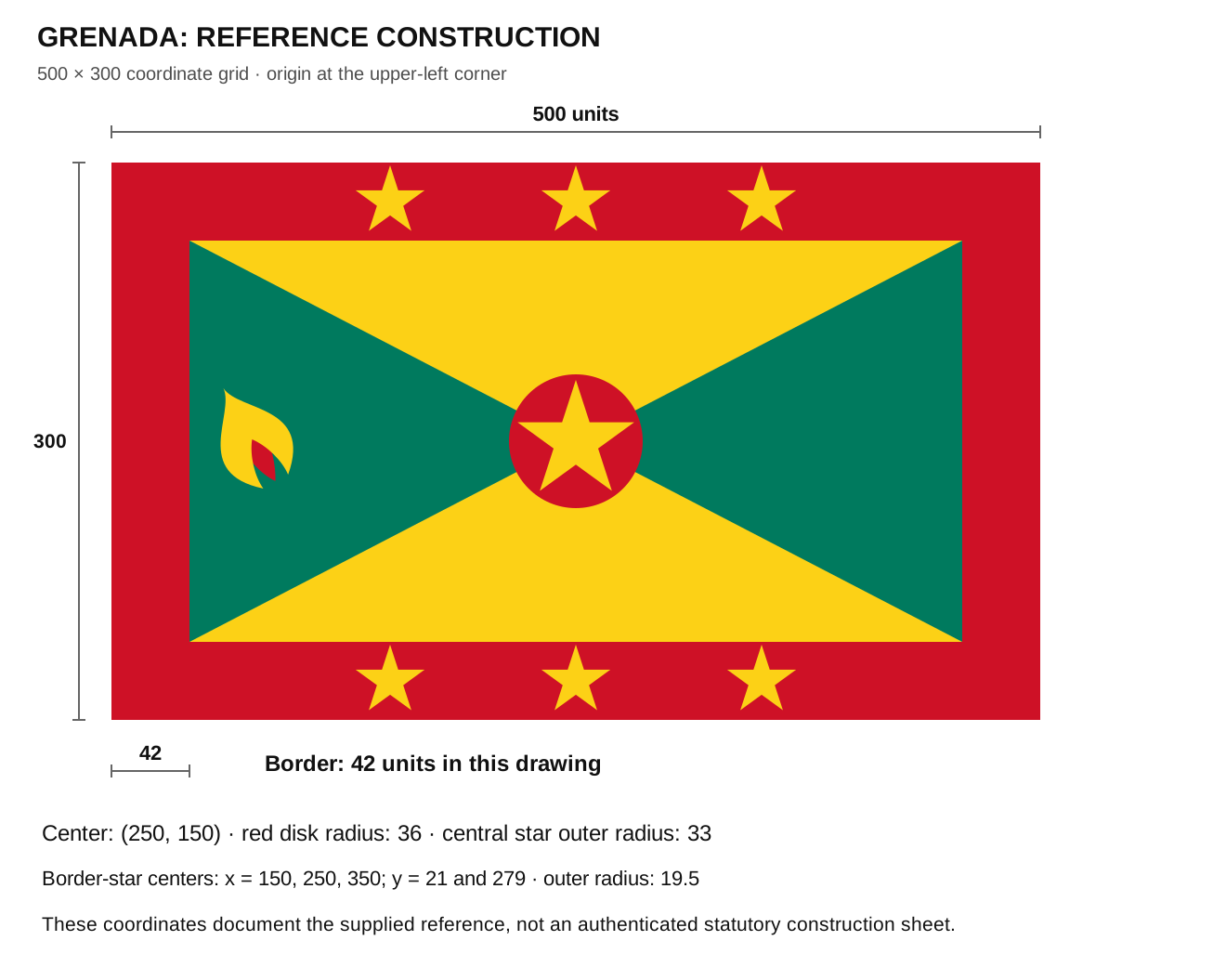
The supplied land reference uses a 500-by-300 grid, a 42-unit red border, and a central disk of radius 36 at (250, 150). Its measured internal coordinates describe this digital reference; the government’s stated land ratio is 5:3.
GKBook composition, CC0; underlying flag geometry, public domain.Download image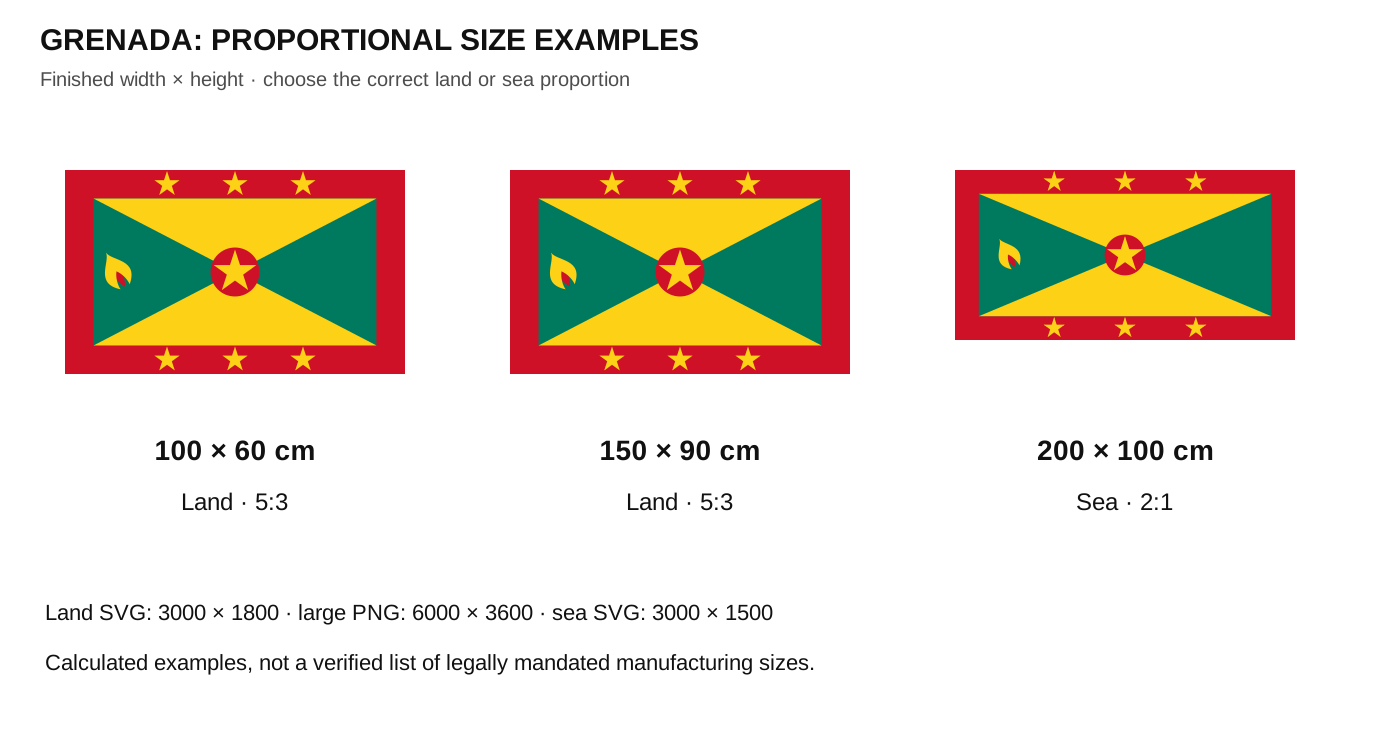
A 5:3 land flag may measure 100 by 60 or 150 by 90 centimeters; a 2:1 sea flag may measure 200 by 100 centimeters. These are calculated examples, not a published official size schedule.
GKBook composition, CC0; underlying flag geometry, public domain.Download image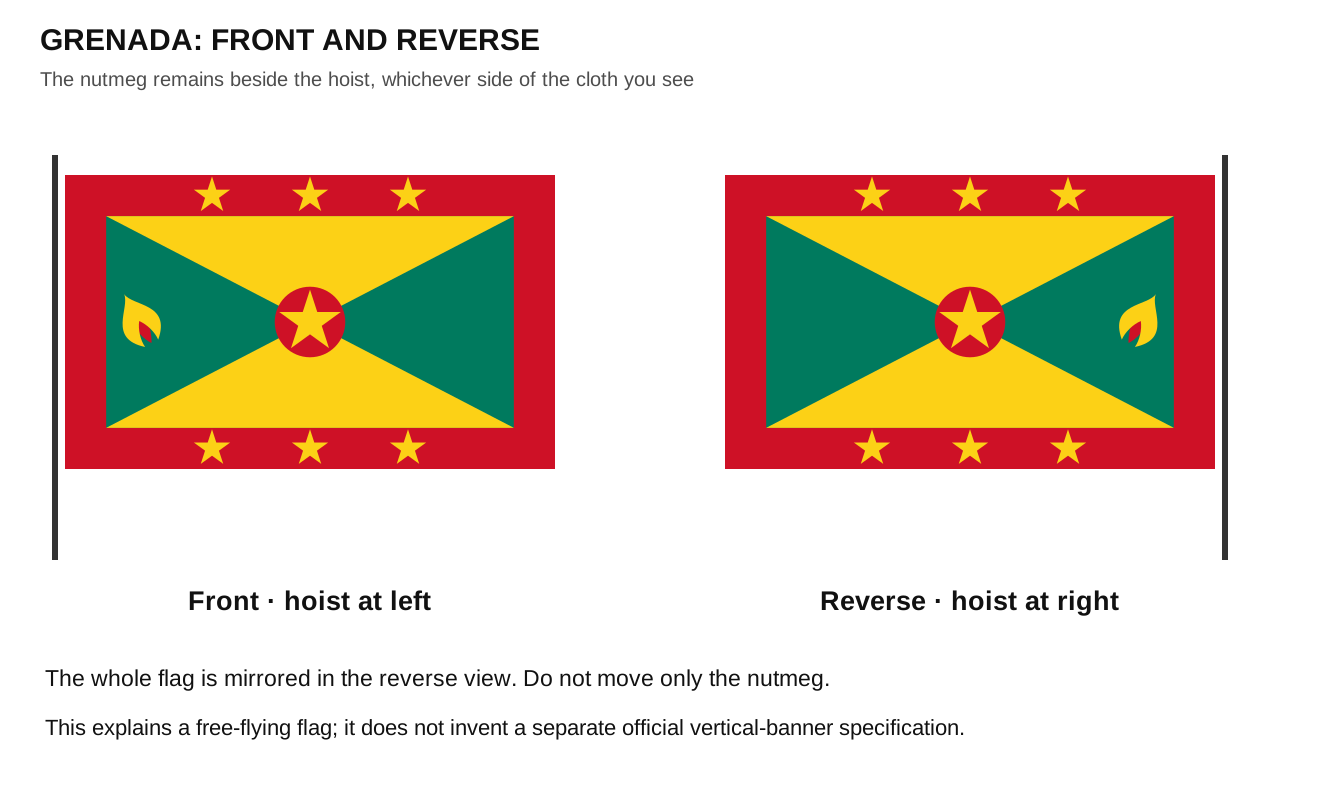
The front-facing reference has the nutmeg at the left attachment edge. Seen from behind, the whole design is mirrored and the nutmeg appears at the right attachment edge. This is a reverse view, not an upside-down flag.
GKBook composition, CC0; underlying flag geometry, public domain.Download image
Grenada’s official guidance gives a 2:1 width:height proportion for the flag at sea. This complete maritime reference keeps the central disk circular and the stars upright while using the wider rectangle.
GKBook composition, CC0; underlying flag geometry, public domain.Download image
The land flag is 5:3 width:height and the sea flag is 2:1. Both show the red border, seven stars, gold and green triangles, and nutmeg; the two complete references retain their own internal geometry.
GKBook composition, CC0; underlying flag geometry, public domain.Download image
Modern reconstruction of Grenada’s associated-state flag used from 1967 to 1974: blue, yellow, and green horizontal bands with a central nutmeg device in a white oval. The complete reference retains its native 3:2 proportions.
GKBook composition, CC0; underlying flag geometry, public domain.Download image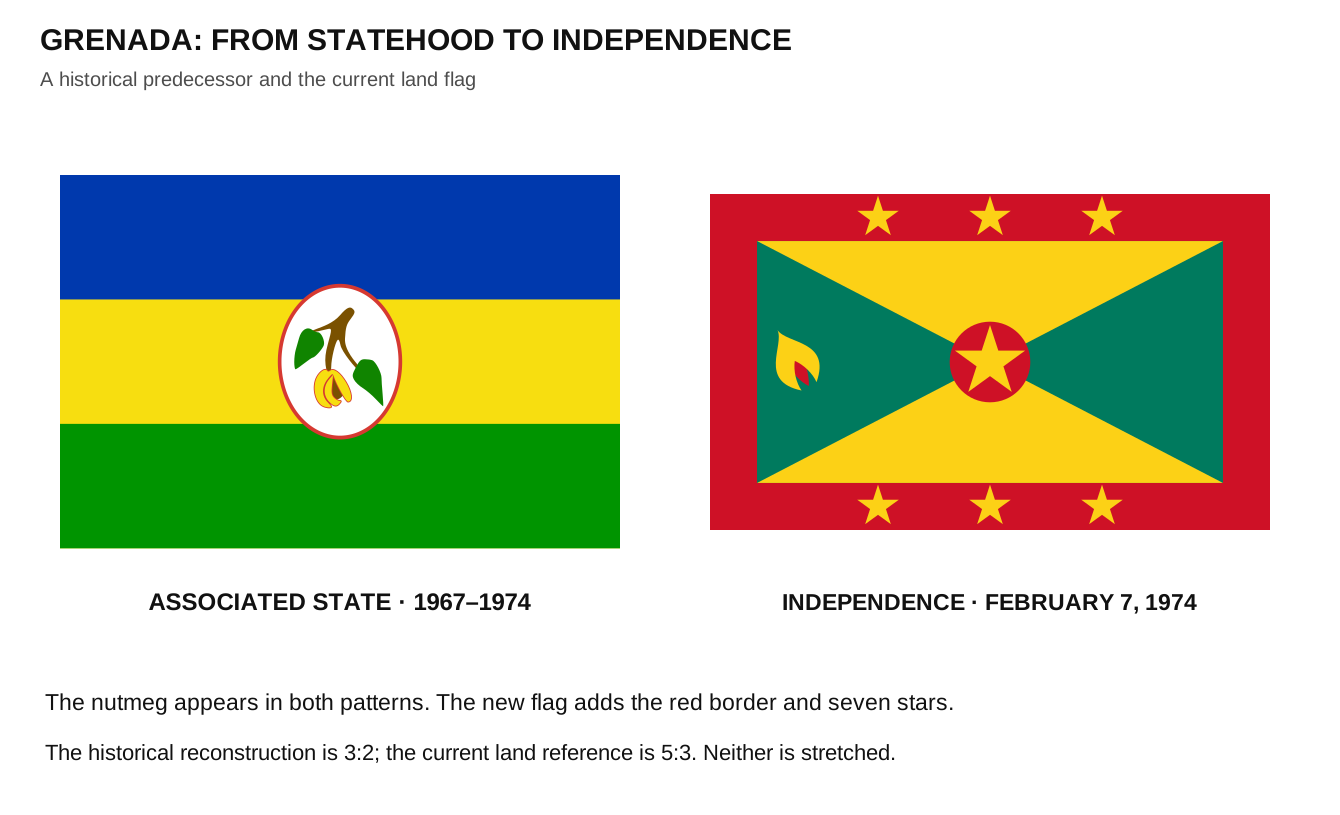
The 1967–1974 associated-state flag used horizontal blue, yellow, and green bands. The independence flag adopted on February 7, 1974 uses the red frame, triangles, seven stars, and hoist-side nutmeg.
GKBook composition, CC0; underlying flag geometry, public domain.Download image
February 7 is Grenada’s Independence Day. The present national flag was adopted at independence in 1974; the National Museum identifies its first raising at midnight as the new day began.
GKBook composition, CC0; underlying flag geometry, public domain.Download image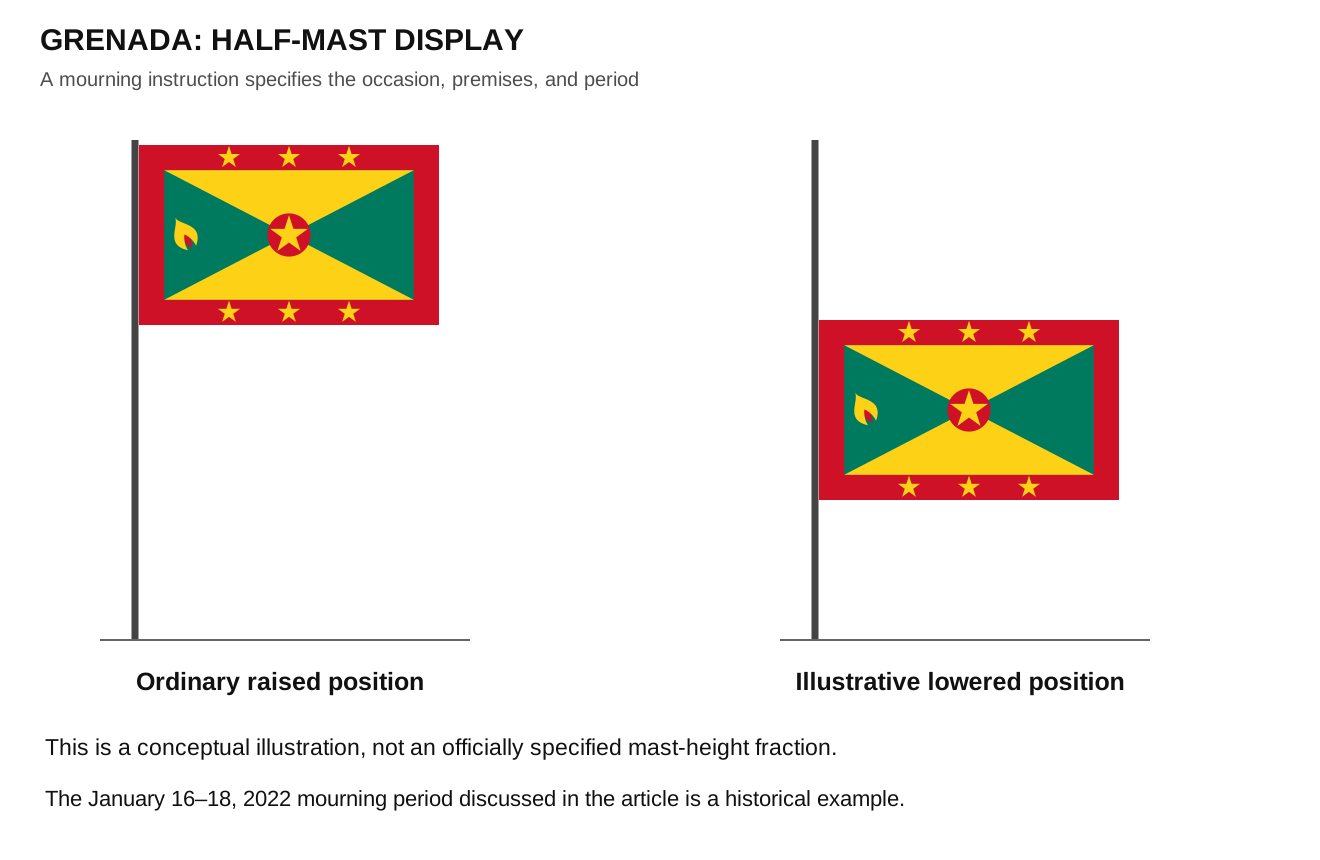
A lowered Grenada flag represents mourning. The illustrated height is conceptual; the 2022 official announcement supplied a period from sunrise January 16 through sundown January 18 for Sir Carlyle Glean’s funeral.
GKBook composition, CC0; underlying flag geometry, public domain.Download image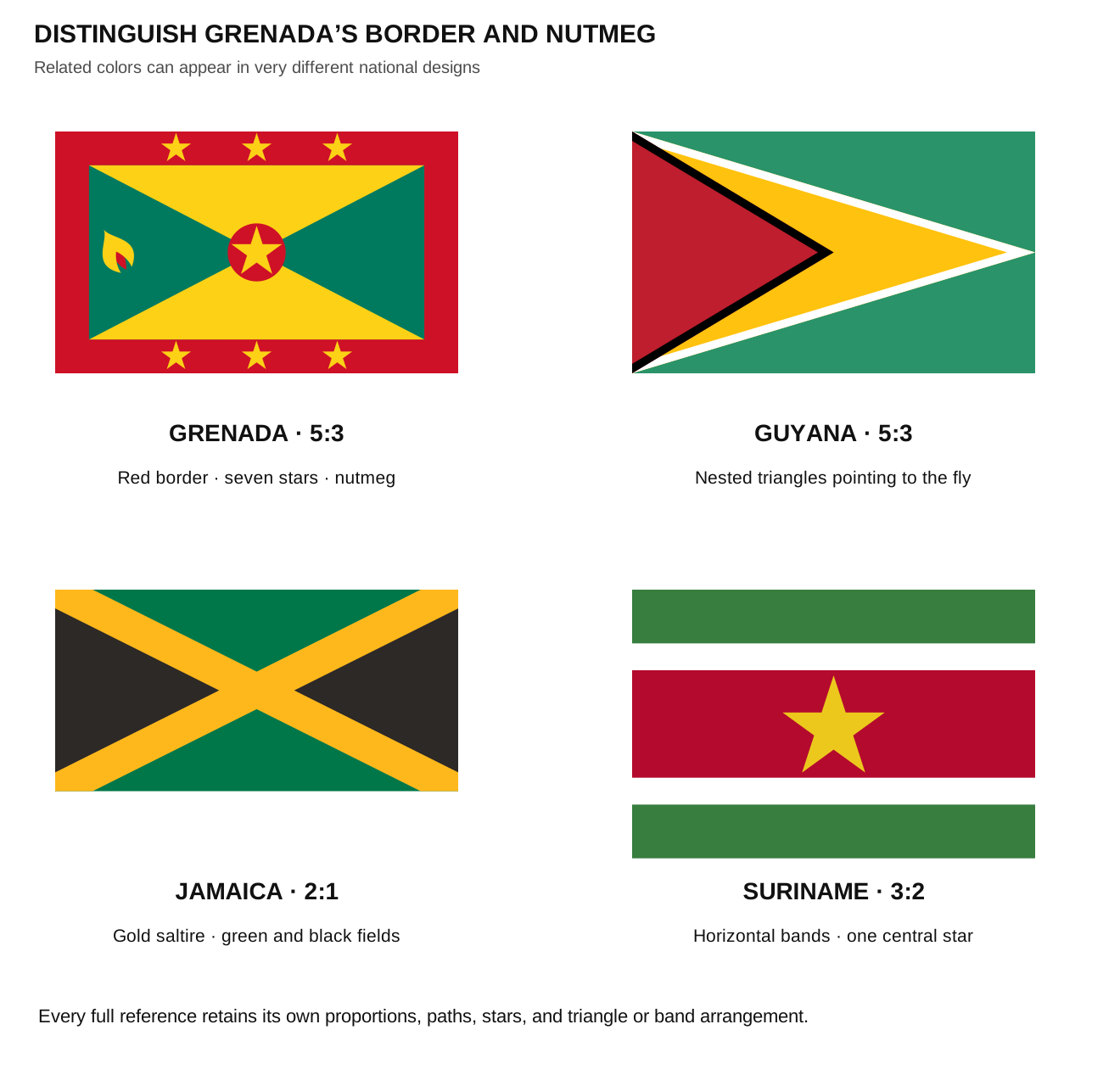
Grenada’s red border, seven stars, and nutmeg distinguish it from Guyana’s nested triangles, Jamaica’s gold diagonal cross, and Suriname’s bands and single star. The four flags retain their own proportions.
GKBook composition, CC0; underlying flag geometry, public domain.Download image
A Grenada flag hangs over a crate during a group photograph at Marine Corps Base Quantico in April 2009. The Marine Corps caption associates the crate with a helicopter component returned from Grenada.
U.S. Marine Corps; individual photographer not named in the reviewed file record. Public domain in the United States; official U.S. federal military photograph.Download image
Close-up of a nutmeg seed with a red aril, the covering used as mace. Photograph by Raerah; the reviewed file record does not establish where it was taken. It provides botanical context for the flag’s stylized nutmeg.
Raerah at English Wikipedia. Public domain, released by the photographer.Download imageFrequently asked questions
What does Grenada’s national flag look like?
Grenada’s flag has a red border around four triangles: gold at the top and bottom, green at the sides. Six gold stars sit on the border and a seventh appears on a central red disk. A red-and-gold nutmeg symbol lies in the green triangle beside the hoist.
How are the flag’s triangles and stars arranged?
The inner field is divided diagonally into four triangles that meet beneath the central disk. Three small gold stars run along the upper red border and three along the lower border. A larger gold star occupies the disk. The nutmeg belongs in the green triangle nearest the attachment edge.
What are the HEX and RGB colors of Grenada’s flag?
The supplied digital artwork uses red #CE1126, RGB 206, 17, 38; gold #FCD116, RGB 252, 209, 22; and green #007A5E, RGB 0, 122, 94. These are the actual reference-file fills. The government names the colors but the reviewed guidance does not authenticate these numerical codes as legal standards.
What do Grenada’s flag colors symbolize?
The Government of Grenada connects red with courage and vitality, gold with wisdom and sunshine, and green with vegetation and agriculture. The red border also conveys unity. These are explanatory meanings attached to the national design; they should be distinguished from exact numerical color specifications for screens, printing, or fabric.
What is the small symbol on Grenada’s flag?
The small red-and-gold symbol near the hoist represents nutmeg. It connects the flag with Grenada’s agricultural identity and its Isle of Spice nickname. Although the stylized shape can resemble a flame or leaf at a glance, it should be reproduced as the complete nutmeg device rather than replaced with another symbol.
What do the seven stars on Grenada’s flag represent?
Grenada’s consulates in Toronto and Miami explain the six border stars as the six parishes and the central star as St. George’s, the capital. The central government page instead refers collectively to seven parishes. Because these official accounts differ, the article attributes the wording rather than inventing a seventh mainland parish.
What are Grenada’s flag proportions?
The Government of Grenada lists 5:3 width:height for use on land and 2:1 for use at sea. A land flag is therefore about 1.667 times as wide as it is high, while the sea format is twice as wide. State which format is intended before ordering or resizing artwork.
How is the downloadable Grenada flag constructed?
The land reference uses a 500-by-300 coordinate grid with a 42-unit red border. Its center is (250, 150), where a red disk of radius 36 carries the larger star. These measurements describe the supplied digital drawing; they are not presented as an authenticated statutory construction sheet for every official flag.
What sizes preserve Grenada’s flag proportions?
For land use, examples include 100 by 60 centimeters or 150 by 90 centimeters. For sea use, 200 by 100 centimeters preserves the 2:1 format. These are calculations from the stated ratios, not a verified official size schedule. Scale the complete design uniformly and account separately for hems or sleeves.
Is Grenada’s sea flag simply a stretched land flag?
The sea flag uses the same recognizable colors and symbols in a wider 2:1 rectangle. The downloadable sea reference is a separate complete drawing with circular central disk and correctly shaped stars. Stretching the land artwork horizontally would distort those features, so choose the appropriate master before scaling it.
How has Grenada’s flag changed over time?
Grenada’s flag history includes British colonial ensigns, a blue-yellow-green associated-state flag used from 1967 to 1974, and the present independence flag adopted on February 7, 1974. Those stages reflect different political settings. The historical illustrations are modern reconstructions, while the current land and sea designs are presented separately.
What flag did Grenada use from 1967 to 1974?
During the associated-state period, Grenada used three horizontal bands of blue, yellow, and green with a central nutmeg device in a white oval. The supplied reconstruction preserves its complete emblem and native 3:2 rectangle. It is a historical predecessor, not an alternate version of today’s red-bordered national flag.
When was Grenada’s present flag adopted?
Grenada adopted the present national flag on February 7, 1974, when it became independent from the United Kingdom. The Grenada National Museum dates the first raising to midnight as that day began. The adoption date belongs to the flag’s history; it is different from the creation date of a modern digital drawing.
Who designed Grenada’s national flag?
Anthony C. George designed Grenada’s national flag. The government identifies him with Soubise in St. Andrew. A 2024 obituary gives his full name as Anthony Conrad George and records his birth in Carriacou in 1938. His authorship of the national design is distinct from later contributors who created digital reproductions.
How should Grenada’s flag be prepared for manufacture?
Choose the correct land or sea proportion, retain all seven stars and the complete nutmeg, and keep the center disk circular. Use suitable fabric and durable reproduction methods for the intended setting. These are practical production principles; the reviewed official page does not establish a complete material specification or procurement standard.
What basic flag etiquette does Grenada publish?
Grenada’s official guidance calls for respectful treatment, keeping the flag off the ground or floor, and avoiding purely decorative uses on temporary or discardable objects except for state occasions. It also addresses official buildings, nighttime display, and precedence. Read those provisions with their exceptions instead of converting every recommendation into an absolute rule.
Can Grenada’s flag be flown after sunset?
Government guidance generally says the flag should not be flown after sunset except inside a building, but allows outdoor display on important ceremonial occasions, with floodlighting if possible. For government and municipal buildings, it recommends lowering at sundown and raising at 8 a.m. if possible. The qualifying wording matters.
Where should the nutmeg appear when the flag is displayed?
In the usual front-facing horizontal illustration, the nutmeg is in the green triangle at the left, beside the hoist. Viewed from the reverse of a free-flying flag, it appears on the right beside the same attachment edge. Mirror the whole design for that view; do not move the nutmeg alone.
What does Grenada say about displaying other flags beside its flag?
The government’s guidance says another flag should not be placed above or to the right of Grenada’s national flag, with exceptions for foreign embassies, consulates, and missions. The reviewed wording does not define the viewing direction for right. A ceremony organizer should apply the appropriate protocol to the actual arrangement.
When is Grenada’s main national flag-related celebration?
February 7, Independence Day, is the clearest annual national occasion connected with Grenada’s flag because independence and adoption of the current design occurred together in 1974. The consulted official sources did not establish a separate annual Flag Day. A flag-raising event should be identified by its actual occasion and date.
When does Grenada fly its flag at half-mast?
Grenada uses half-mast display during announced periods of mourning. Official notices for former governor-general Sir Carlyle Glean in 2021 and 2022 provide documented examples, including a defined period around his funeral. Read the relevant announcement for its dates and scope; an archived notice is not an instruction to lower flags today.
What did the January 2022 half-mast announcement specify?
A government announcement for Sir Carlyle Glean’s state funeral specified half-mast display from sunrise on Sunday, January 16, 2022, through sundown on the funeral day, Tuesday, January 18. This dated example shows how a mourning instruction supplies a beginning and end. It is not a permanent annual observance.
Does half-mast mean an exact measured height in these sources?
The reviewed Grenadian notices call for half-mast display without defining a numerical fraction for the top, center, or bottom of the cloth. The accompanying diagram therefore illustrates a lowered position conceptually. Follow the responsible institution’s technical directions for a particular pole and ceremony instead of importing a measurement from another country.
How should a Grenada flag be cared for?
Keep the flag clean, prevent it from touching the ground, and repair or replace damaged cloth as appropriate. Follow the textile’s care instructions and dry it before storage. Apart from the government’s respectful-handling guidance, these are practical care suggestions; no mandatory Grenadian folding pattern or retirement ritual was verified.
Does downloading a flag image authorize every commercial use?
No. Permission to reuse a particular drawing or photograph concerns its copyright status. It does not by itself establish government endorsement, trademark clearance, or compliance with national-symbol rules. The package identifies its image rights, while a proposed product, logo, or advertisement may require a separate assessment of the intended use.
Is Grenada’s coat of arms part of the national flag?
No. Grenada’s national flag contains the triangles, border, seven stars, central disk, and nutmeg, without the full coat of arms. The coat of arms is a separate national emblem with a shield and supporting figures. Adding that emblem to the plain flag would change the design shown in the national reference.
How can Grenada’s flag be distinguished from similar flags?
Look for Grenada’s red border, seven gold stars, and small nutmeg beside the hoist. Guyana uses nested triangles, Jamaica uses a gold diagonal cross with green and black fields, and Suriname uses horizontal bands with one central star. Their shared colors do not make their geometry or symbolic explanations interchangeable.
What is Grenada’s flag emoji and country code?
Grenada’s flag emoji is 🇬🇩. It combines regional indicator G, U+1F1EC, with regional indicator D, U+1F1E9, corresponding to the country code GD. The appearance depends on the device or application. Use the provided SVG or PNG when consistent proportions, complete symbols, and specified digital reference colors are needed.
What does the April 2009 flag photograph document?
The photograph shows a Grenada flag draped over a crate at Marine Corps Base Quantico in April 2009, with a group posed behind it. The Marine Corps caption connects the crate with a helicopter component returned from Grenada. This is a dated documentary scene, not a flag construction or color standard.
How are nutmeg and mace related?
Nutmeg and mace come from different parts of the same seed structure: nutmeg is the seed spice, while mace comes from its colored aril, or outer covering. The close-up photograph shows the red aril around the seed. It explains the agricultural subject without turning the flag’s stylized emblem into a botanical diagram.
What mistakes should be avoided when drawing Grenada’s flag?
Keep three border stars above, three below, and one larger star on the central disk. Preserve gold upper and lower triangles, green side triangles, and the complete nutmeg near the hoist. Do not omit the red border, stretch the central circle, substitute the coat of arms, or confuse land and sea proportions.
Which Grenada flag pictures are available to download?
The package contains a plain national SVG and large PNG, a separate sea flag, the associated-state predecessor, and diagrams of layout, nutmeg, stars, construction, sizes, orientation, history, Independence Day, and mourning. A comparison sheet and two photographs add context. Every gallery download points to a local file on GKBook.
Explore all general-knowledge topics and the A-to-Z lists.

We Value Your Opinion Comments